Lanyon A Simple Blogger template

Free tutorials, courses, generative tools, and projects built with Javascript, PHP, Python, ML, AI,.Net, C#, Microsoft, Youtube, Github Code Download and more.

August 2020

Archive for August 2020

Data Analysis with Python: Part 3 of 6 Numerical Computing with Numpy (Live Course)


Curriculum for the course Data Analysis with Python: Part 3 of 6 Numerical Computing with Numpy (Live Course)

“Data Analysis with Python: Zero to Pandas” is a practical, beginner-friendly and coding-focused introduction to data analysis covering the basics of Python, Numpy, Pandas, data visualization and exploratory data analysis. You can learn more and register for a Certificate of Accomplishment at http://zerotopandas.com ⭐️ Resources ⭐️ 🔗 Numerical computing with Numpy: https://jovian.ml/aakashns/python-numerical-computing-with-numpy 🔗 100 Numpy exercises: https://jovian.ml/aakashns/100-numpy-exercises 🔗 Numpy array operations assignment: https://jovian.ml/learn/data-analysis-with-python-zero-to-pandas/assignment/assignment-2-numpy-array-operations 🔗 Discussion forum: https://jovian.ml/forum/t/lecture-3-numerical-computing-with-python-numpy/10593 ⭐️ Topics covered ⭐️ ⌨️ Going from Python lists to Numpy arrays ⌨️ Working with multi-dimensional arrays ⌨️ Array operations, slicing and broadcasting ⌨️ Working with CSV data files 🎥 Watch the entire series here: https://www.youtube.com/playlist?list=PLWKjhJtqVAblvI1i46ScbKV2jH1gdL7VQ ✏️This course is taught by Aakash N S, cofounder & CEO of Jovian.ml - a platform for sharing, showcasing and collaborating on data science projects online 🔗 YouTube: https://youtube.com/jovianml 🔗 Twitter: https://twitter.com/jovianml 🔗 LinkedIn: https://linkedin.com/company/jovianml -- Learn to code for free and get a developer job: https://www.freecodecamp.org Read hundreds of articles on programming: https://freecodecamp.org/news And subscribe for new videos on technology every day: https://youtube.com/subscription_center?add_user=freecodecamp

Watch Online Full Course: Data Analysis with Python: Part 3 of 6 Numerical Computing with Numpy (Live Course)


Click Here to watch on Youtube: Data Analysis with Python: Part 3 of 6 Numerical Computing with Numpy (Live Course)


This video is first published on youtube via freecodecamp. If Video does not appear here, you can watch this on Youtube always.


Udemy Data Analysis with Python: Part 3 of 6 Numerical Computing with Numpy (Live Course) courses free download, Plurasight Data Analysis with Python: Part 3 of 6 Numerical Computing with Numpy (Live Course) courses free download, Linda Data Analysis with Python: Part 3 of 6 Numerical Computing with Numpy (Live Course) courses free download, Coursera Data Analysis with Python: Part 3 of 6 Numerical Computing with Numpy (Live Course) course download free, Brad Hussey udemy course free, free programming full course download, full course with project files, Download full project free, College major project download, CS major project idea, EC major project idea, clone projects download free

F# 5 update for August

We’re excited to announce more updates to F# 5 which will go alongside .NET 5 preview 8! We’ve shipped various updates since the beginning of this year:

Today, we’re pleased to announce the completion of the F# 5 feature work. There is one minor enhancement planned for the .NET 5 RC, but other than that we are finished with F# 5! From this point forward, our journey to shipping F# 5 will be focused mostly on bug fixes and addressing feedback.

You can get the latest F# 5 in these ways

If you’re using Visual Studio on Windows, you’ll need both the .NET 5 preview SDK and Visual Studio Preview installed.

Using F# 5 preview

You can use F# 5 preview via the .NET 5 preview SDK, or through the .NET and Jupyter Notebooks support.

If you’re using the .NET 5 preview SDK, check out the sample repository which shows off some of what you can do with F# 5. You can play with each of the features there instead of starting from scratch.

If you’d rather use F# 5 in your own project, you’ll need to add a LangVersion property with preview as the value. It should look something like this:

Alternatively, if you’re using Jupyter Notebooks and want a more interactive experience, check out a sample notebook that shows the same features, but has a more interactive output.

String Interpolation

This preview adds String Interpolation, one of the most highly-requested language features and the very first feature that we had an initial design for in the F# Language Design repository. The design has undergone a lot of discussion over the years, but finally a breakthrough on how to best handle it was made by Yatao Li, who also supplied an initial implementation.

F# interpolated strings are fairly similar to C# or JavaScript interpolated strings, in that they let you write code in "holes" inside of a string literal. Here’s a basic example:

However, F# interpolated strings also allow for typed interpolations, just like the sprintf function, to enforce that an expression inside of an interpolated context conforms to a particular type. It uses the same format specifiers.

Support for nameof is now complete

In the June update, we mentioned that we were finishing up several design changes for nameof. These are now complete!

To recap, nameof resolves the symbol it’s being used for and produces a name that represents what it’s called in F# source. This is useful in various scenarios, such as logging, and protects your logging against changes in source code.

The last line will throw an exception and "month" will be shown in the error message.

You can take a name of nearly everything in F#:

Three final additions are changes to how operators work: the addition of the nameof<'type-parameter> form for generic type parameters, and the ability to use nameof as a pattern in a pattern match expression.

The nameof<'type-parameter> form aligns with how typeof and typedefof work in F# today.

Open Type declarations

This preview also adds Open Type Declarations. It’s like Open Static Classes in C#, except with some different syntax and some slightly different behavior to fit F# semantics.

With Open Type Declarations, you can open any type to expose static contents inside of it. Additionally, you can open F#-defined unions and records to expose their contents. This can be useful if you have a union defined in a module and want to access its cases, but don’t want to open the entire module.

Overloads of custom keywords in computation expressions

Computation expressions are a powerful feature for library and framework authors. They allow you to greatly improve the expressiveness of your components by letting you define well-known members and form a DSL for the domain you’re working in.

We’ve enhanced computation expressions to allow for Applicative forms already. This time, Diego Esmerio and Ryan Riley contributed a design an implementation to allow for overloading custom keywords in computation expressions. This new feature allows code like the following to be written:

Prior to this change, you could write the InputBuilder type as it is, but you couldn’t use it the way it’s used in the previous example. Since overloads, optional parameters, and now System.ParamArray types are allowed, everything just works as you’d expect it to.

Thanks, Diego and Ryan!

Interfaces can be implemented at different generic instantiations

The final feature enabled in this preview is an enhancement to interfaces in F#. You can now implement the same interface at different generic instantiations. Lukas Rieger contributed an initial design and implementation of this feature.

Thanks, Lukas!

Finishing F# 5

Now that we’re feature complete for F# 5, minus a tweak here or there, we’re going to shift our focus:

  • Address bug fixes and high-priority feedback items for F# 5
  • Improve our engineering system in the F# development repository, particularly to improve our testing infrastructure so that it’s easier for open source contributors to work there

After F# 5 ships alongside .NET 5, we’ll also start our planning for the next wave of F# investments. We’d love for you to join us when we get there.

Cheers, and happy F# coding!

The post F# 5 update for August appeared first on .NET Blog.


source https://devblogs.microsoft.com/dotnet/f-5-update-for-august/

Automatically find latent bugs in your code with .NET 5

It’s an exciting time to be writing code! Especially for .NET developers as the platform keeps getting smarter. We now include rich diagnostics and code suggestions in the .NET SDK by default. Before you would need to install NuGet packages or other stand-alone tools to get more code analysis. Now, you will automatically get these in the new .NET 5 SDK.

In the past, we’ve been reluctant to add new warnings to C#. This is because adding new warnings is technically a source breaking change for users who have warnings set as errors. However, there are a lot of cases we’ve come across over the years where we also really want to warn people that something was wrong, ranging from common coding mistakes to common API misuse patterns.

Starting with .NET 5, we’re introducing what we’re calling AnalysisLevel in the C# compiler to introduce warnings for these patterns in a safe way. The default Analysis Level for all projects targeting .NET 5 will be set to 5, meaning that more warnings (and suggestions to fix them) will be introduced.

Let’s talk about what the possible values for AnalysisLevel mean in your project. First thing we should note: unless you override the default, AnalysisLevel is set based on your target framework:

Target Framework Default for AnalysisLevel
net5.0 5
netcoreapp3.1 or lower 4
netstandard2.1 or lower 4
.NET Framework 4.8 or lower 4


However, what about the numbers 0-3? here is a more detailed breakdown of what each analysis level value means.

AnalysisLevel Effect On C# Compiler Advanced Platform API Analysis
5 Get new compiler language analysis (details below) Yes
4 identical to passing -warn:4 to the C# compiler in previous versions No
3 identical to passing -warn:3 to the C# compiler in previous versions No
2 identical to passing -warn:2 to the C# compiler in previous versions No
1 identical to passing -warn:1 to the C# compiler in previous versions No
0 identical to passing -warn:0 to the C# compiler in previous versions, turns off all emission of warnings No


Since AnalysisLevel is tied to the target framework of your project, unless you change what your code targets, you will never change your default analysis level. You can manually set your analysis level though. For example, even if we are targeting .NET Core App 3.1 or .NET Standard (and therefore have AnalysisLevel defaulted to 4) you can still opt into a higher level.

Here is an example of doing that:

<Project Sdk="Microsoft.NET.Sdk">

  <PropertyGroup>
    <OutputType>Exe</OutputType>
    <TargetFramework>netcoreapp3.1</TargetFramework>
    <!-- get more advanced warnings for this project -->
    <AnalysisLevel>5</AnalysisLevel>
  </PropertyGroup>

</Project>
If you always want to be on the highest supported analysis level you can specify latest in your project file:
<Project Sdk="Microsoft.NET.Sdk">

  <PropertyGroup>
    <OutputType>Exe</OutputType>
    <TargetFramework>netcoreapp3.1</TargetFramework>
    <!-- be automatically updated to the newest stable level -->
    <AnalysisLevel>latest</AnalysisLevel>
  </PropertyGroup>

</Project>

If you are very adventurous and want to try out experimental compiler and platform analysis you can specify preview to get the latest, cutting-edge code diagnostics.

Please note that when you use latest or preview, the analysis results might vary between machines, depending on the available SDK and the highest analysis level it offers.

<Project Sdk="Microsoft.NET.Sdk">

  <PropertyGroup>
    <OutputType>Exe</OutputType>
    <TargetFramework>netcoreapp3.1</TargetFramework>
    <!-- be opted into experimental code correctness warnings -->
    <AnalysisLevel>preview</AnalysisLevel>
  </PropertyGroup>

</Project>

Finally, we have none which means “I dont’ want to see any new warnings.” In this mode, you won’t get any of the advanced API analysis nor new compiler warnings. This is useful if you need to update your framework but you’re not ready to absorb new warnings yet.

<Project Sdk="Microsoft.NET.Sdk">

  <PropertyGroup>
    <OutputType>Exe</OutputType>
    <TargetFramework>net5</TargetFramework>
    <!-- I am just fine thanks -->
    <AnalysisLevel>none</AnalysisLevel>
  </PropertyGroup>

</Project>

You can also configure the analysis level for a project from within Visual Studio via the Code Analysis property page. Just navigate to the project property page from the Solution Explorer. Then go to the Code Analysis tab.
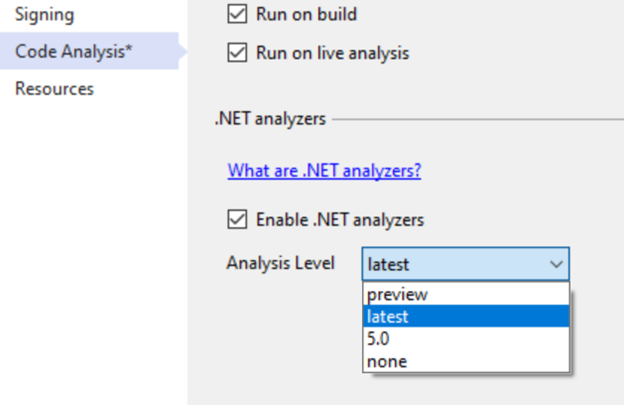
Configure Analysis Level in Visual Studio

In the future we will add a new analysis level for every release of .NET. The goal is to make sure that a given analysis level always represents the same set of analysis defaults (the rules and their severities). If we want to turn an existing rule on by default, we’ll do this in an upcoming analysis level, instead of changing the existing level. This ensures that a given project/source always produces the same warning, regardless of how new the SDK is (unless the project uses preview or latest, of course).

Since all .NET 5 projects will be opted into Analysis Level 5, let’s look at some of the new warnings and suggestions that will be offered.


All New Warnings and Errors coming in Analysis Level 5

The ones in bold are going to be in level 5 by the time .NET 5 ships. The rest are new warnings are available today in .NET 5 Preview 8 with Visual Studio 2019 16.8 Preview 2!

Id Category Severity Description
CA1416 Interoperability Warning Warn when code does not work across all platforms
CA1417 Interoperability Warning Do not use OutAttribute on string parameters for P/Invokes
CA1831 Performance Warning Use AsSpan instead of Range-based indexers for string when appropriate
CA2013 Reliability Warning Do not use ReferenceEquals with value types
CA2014 Reliability Warning Do not use stackalloc in loops
CA2015 Reliability Warning Do not define finalizers for types derived from MemoryManager
CA2200 Usage Warning Rethrow to preserve stack details
CA2247 Usage Warning Argument passed to TaskCompletionSource calls the wrong constructor
CS0177 Correctness Warning track definite assignment of structs across assemblies
CS0185 Correctness Error do not allow locks on non-reference types
CS7023 Correctness Error do not allow as or is on static types
CS8073 Usage Warning warn when expression is always false or true


Warnings for common mistakes

The first set of new warnings are intended to find latent bugs, often in larger codebases. These can be very easy to introduce without additional compiler analysis today.

Warn when expression is always true or false

This new warning is extremely common. Consider the following code:

public void M(DateTime dateTime)
{
    if (dateTime == null) // warning CS8073
    {
        return;
    }
}

DateTime is a struct and structs cannot be null. Starting in .NET 5 we will warn about this case with CS8073. The warning message is:

Warning CS8073: The result of the expression is always ‘false’ since the value of type ‘DateTime’ is never equal to ‘null’ of type ‘DateTime?’

It might seem rather obvious what this code is doing is unnecessary in isolation but consider that such a check might occur in a method with 10 parameters to validate. To fix this you can remove the code (since its always false it’s not doing anything anyways), or change its type to DateTime? if null is an intended value for the parameter.

public void M(DateTime? dateTime) // We accept a null DateTime
{
    if (dateTime == null) // No Warnings
    {
        return;
    }
}


Do not allow as or is on static types

This next one is a nice little enhancement:

static class Fiz
{
}

class P
{
    bool M(object o)
    {
        return o is Fiz; // CS7023
    }
}

Because Fiz is a static class an instance object like o will never be able to be an instance of this type. We will get this warning:

Warning CS7023 The second operand of an ‘is’ or ‘as’ operator may not be static type ‘Fiz’

The fix for this is to refactor our code (maybe we are actually checking against the wrong type to begin with), or to make the class Fiz non-static:

class Fiz
{
}

class P
{
    bool M(object o)
    {
        return o is Fiz; // no error
    }
}


Do not allow locks on non-reference types

locking on a non-reference type (like an int) does nothing because they are pass-by-value so a different version of them lives on every stack frame. In the past we would warn you about locking on non-reference types for simple cases like lock(5) but until recently we would not warn you for open generics like below.

public class P
{
    public static void GetValue<TKey>(TKey key)
    {
        lock (key) // CS0185
        {
        }
    }

    static void Main()
    {
        GetValue(1);
    }
}

This is an error because passing in an int (which is allowed under this unconstrained generic) will not actually lock correctly. We’ll see this error:

Error CS0185 ‘TKey’ is not a reference type as required by the lock statement

To fix this we need to indicate that the GetValue method should only be given reference types. We can do this with the generic type constraint where TKey : class

public class P
{
    public static void GetValue<TKey>(TKey key) where TKey : class
    {
        lock (key) // no error
        {
        }
    }
}


Rethrow to preserve stack details

We’re all good (?) developers so our code never throws exceptions, right? Well even the best developers need to handle exceptions in .NET and one of the common pitfalls new programmers fall into is this:

try
{
    throw new Exception();
}
catch (Exception ex)
{
    // probably logging some info here...

    // rethrow now that we are done
    throw ex; // CA2200
}

In school I learned that if someone threw the ball at me and I caught it, I had to throw the ball back! Metaphors like this lead lots of folks to believe that throw ex is the correct way to re-throw this exception. Sadly, this will change the stacks in the original exception. Now you will get a warning that this is happening. It looks like this:

Warning CA2200 Re-throwing caught exception changes stack information

In nearly all cases the correct thing to do here is to simply use the throw keyword without mentioning the variable of the exception we caught.

try
{
    throw new Exception();
}
catch (Exception ex)
{
    // probably logging some info here...

    // rethrow now that we are done
    throw;
}

We also offer a code fix to easily fix up all of these at once in your document, project, or solution!
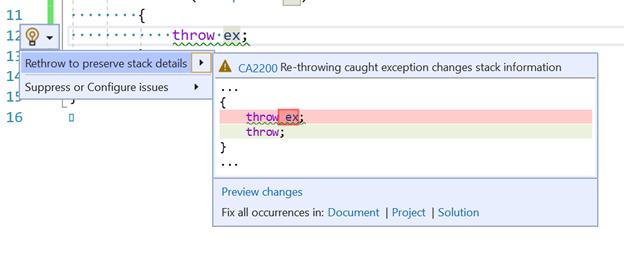
Code fix for Rethrow


Do not use ReferenceEquals with value types

Equality is a tricky topic in .NET. This next warning strives to make accidentally comparing a struct by reference apparent. Consider the code below:

int int1 = 1;
int int2 = 1;
Console.WriteLine(object.ReferenceEquals(int1, int2)); // warning CA2013

This will box the two ints and ReferenceEquals will always return false as a result. We will see this warning description:

Warning CA2013: Do not pass an argument with value type ‘int’ to ‘ReferenceEquals’. Due to value boxing, this call to ‘ReferenceEquals’ will always return ‘false’.

The fix for this error is to either use the equality operator == or object.Equals like so:

int int1 = 1;
int int2 = 1;
Console.WriteLine(int1 == int2); // using the equality operator is fine
Console.WriteLine(object.Equals(int1, int2));  // so is object.Equals


Track definite assignment of structs across assemblies

This next warning is something that a lot of people may be surprised to learn wasn’t already a warning:

using System.Collections.Immutable;

class P
{
    public void M(out ImmutableArray<int> immutableArray) // CS0177
    {
    }
}

This rule is all about definite assignment, a useful feature in C# that makes sure you don’t forget to assign values to your variables.

Warning CS0177: The out parameter ‘immutableArray’ must be assigned to before control leaves the current method

CS0177 is already issued for several different situations today, but not in the case previously shown. The history here is that this was a bug that traces itself all the way back to the original implementations of the C# compiler. Previously, the C# compiler ignored private fields of reference types in a value type imported from metadata when computing definite assignment. This extremely specific bug meant that a type like ImmutableArray was able to escape definite assignment analysis. Ouch!

Now the compiler will correctly error for you and you can fix it by simply ensuring that it is always assigned a value, like so:

using System.Collections.Immutable;

class P
{
    public bool M(out ImmutableArray<int> immutableArray) // no warning
    {
        immutableArray = ImmutableArray<int>.Empty;
    }
}


Warning for incorrect .NET API usage

The next examples are about correctly using .NET libraries. Analysis Levels allow for guarding against improper use of existing .NET APIs today, but it also has an impact on .NET library evolution moving forward. If a useful API is designed but it has the potential for misuse, a new warning that detects misuse can also be added in tandem with the new API.


Do not define finalizers for types derived from MemoryManager

MemoryManager is a useful class for when you want to implement your own Memory<T> type. This is not something you’re likely to find yourself doing a lot, but when you need it you really need it. This new warning triggers for cases like this:

class DerivedClass <T> : MemoryManager<T>
{
    public override bool Dispose(bool disposing)
    {
        if (disposing)
        {
            _handle.Dispose();
        }
    }
  
    ~DerivedClass() => Dispose(false); // warning CA2015
}

Adding a finalizer to this type can introduce holes in the garbage collector, which we all would prefer to avoid!

Warning CA2015 Adding a finalizer to a type derived from MemoryManager<T> may permit memory to be freed while it is still in use by a Span<T>.

The fix is to remove this finalizer, since it will cause very subtle bugs in your program that will be hard to find and fix.

class DerivedClass <T> : MemoryManager<T>
{
    public override bool Dispose(bool disposing)
    {
        if (disposing)
        {
            _handle.Dispose();
        }
    }
 // No warning, since there is no finalizer here
}


Argument passed to TaskCompletionSource calls the wrong constructor

This warning notifies us that we’ve used just slightly the wrong enum.

var tcs = new TaskCompletionSource(TaskContinuationOptions.RunContinuationsAsynchronously); // warning CA2247

Unless you are already aware of the issue you may stare at this for a bit before you see it. The problem is that this constructor does not take a TaskContinuationOptions enum it takes a TaskCreationOptions enum. What is happening is that we are calling the constructor for TaskCompletionSource that accepts object! Considering how similar their names are and that they have very similar values this mistake is easy to make.

Warning CA2247: Argument contains TaskContinuationsOptions enum instead of TaskCreationOptions enum.

The fix is to pass in the correct enum type:

var tcs = new TaskCompletionSource(TaskCreationOptions.RunContinuationsAsynchronously); // no warning


Warn when code does not work across all platforms

This last one is a doozy! I won’t go into all its intricacies here (look forward to a future blog post on that topic). But the purpose of warnings here is to let you know that the APIs you are calling may not work on all the targets you are building for.

Let’s say I have an app that runs on both Linux and Windows. I have a method that I use to get the path to create log files under and it has different behavior based on where it is running.

private static string GetLoggingPath()
{
    var appDataDirectory = Environment.GetFolderPath(Environment.SpecialFolder.LocalApplicationData);
    var loggingDirectory = Path.Combine(appDataDirectory, "Fabrikam", "AssetManagement", "Logging");

    // Create the directory and restrict access using Windows
    // Access Control Lists (ACLs).

    var rules = new DirectorySecurity(); // CA1416
    rules.AddAccessRule(
        new FileSystemAccessRule(@"fabrikam\log-readers",
                                    FileSystemRights.Read,
                                    AccessControlType.Allow)
    );
    rules.AddAccessRule(
        new FileSystemAccessRule(@"fabrikam\log-writers",
                                    FileSystemRights.FullControl,
                                    AccessControlType.Allow)
    );

    if (!OperatingSystem.IsWindows())
    {
        // Just create the directory
        Directory.CreateDirectory(loggingDirectory);
    }
    else
    {
        Directory.CreateDirectory(loggingDirectory, rules);
    }

    return loggingDirectory;
}

I correctly use the OperatingSystem helper to check if the OS is windows with OperatingSystem.IsWindows() and only pass the rules for that case, but I actually have already used platform specific APIs that will not work on Linux!

Warning CA1416: ‘DirectorySecurity’ is unsupported on ‘Linux’

The correct way to handle this is to move all my platform specific code inside the else statement.

private static string GetLoggingPath()
{
    var appDataDirectory = Environment.GetFolderPath(Environment.SpecialFolder.LocalApplicationData);
    var loggingDirectory = Path.Combine(appDataDirectory, "Fabrikam", "AssetManagement", "Logging");

    if (!OperatingSystem.IsWindows())
    {
        // Just create the directory
        Directory.CreateDirectory(loggingDirectory);
    }
    else
    {
        // Create the directory and restrict access using Windows
        // Access Control Lists (ACLs).

        var rules = new DirectorySecurity(); // CA1416
        rules.AddAccessRule(
            new FileSystemAccessRule(@"fabrikam\log-readers",
                                        FileSystemRights.Read,
                                        AccessControlType.Allow)
        );
        rules.AddAccessRule(
            new FileSystemAccessRule(@"fabrikam\log-writers",
                                        FileSystemRights.FullControl,
                                        AccessControlType.Allow)
        );

        Directory.CreateDirectory(loggingDirectory, rules);
    }

    return loggingDirectory;
}


Low level coding help

There are also a few warnings that are useful when writing high-performance applications. These next set of warnings ensure you don’t need to sacrifice safety for these cases.


Do not use OutAttribute on string parameters for P/Invokes

Sometimes you need to interoperate with native code. .NET has the concept of platform invocations (P/Invokes) to make this process easier. However, there are a few gotchas in terms of sending data to and from native libraries in .NET. Consider the code below:

[DllImport("MyLibrary")]
private static extern void Goo([Out] string s); // warning CA1417

Unless you are very familiar with writing P/Invokes, it’s not obvious what is wrong here. You normally apply OutAttribute to types that the runtime doesn’t know about to indicate how the type should be marshaled. The OutAttribute implies that you are passing the data by value. It doesn’t make sense for strings to be passed by value though and has the potential to crash the runtime.

Warning CA1417 Do not use the ‘OutAttribute’ for string parameter ‘s’ which is passed by value. If marshalling of modified data back to the caller is required, use the ‘out’ keyword to pass the string by reference instead.

The fix for this is to either treat it as a normal out parameter (passing by reference).

[DllImport("MyLibrary")]
private static extern void Goo(out string s); // no warning

or if you don’t need the string marshaled back to the caller you can just do this:

[DllImport("MyLibrary")]
private static extern void Goo(string s); // no warning


Use AsSpan instead of Range-based indexers for string when appropriate

This is all about making sure that you don’t accidentally allocate a string.

class Program
{
    public void TestMethod(string str)
    {
        ReadOnlySpan<char> slice = str[1..3]; // CA1831
    }
}

In the code above its clear the developers intent is to index a string using the new range-based index feature in C#. Unfortunately, this will actually allocate a string unless you convert that string to a span first.

Warning CA1831 Use ‘AsSpan’ instead of the ‘System.Range’-based indexer on ‘string’ to avoid creating unnecessary data copies

The fix is to just add AsSpan calls in this case:

class Program
{
    public void TestMethod(string str)
    {
        ReadOnlySpan<char> slice = str.AsSpan()[1..3]; // no warning
    }
}

Do not use stackalloc in loops

The stackalloc keyword is great for when you want to make sure the operations you are doing are easy on the garbage collector. In the past, stackalloc was only allowed in unsafe code, but since C# 8 it’s also been allowed outside of unsafe blocks so long as that variable is assigned to a Span<T> or a ReadOnlySpan<T>.

class C
{
    public void TestMethod(string str)
    {
        int length = 3;
        for (int i = 0; i < length; i++)
        {
            Span<int> numbers = stackalloc int[length]; // CA2014
            numbers[i] = i;
        }
    }
}

Allocating a lot on the stack can lead to the famous StackOverflow exception, where we’ve allocated more memory on the stack than allowed. Allocating in a loop is especially perilous.

Warning CA2014 Potential stack overflow. Move the stackalloc out of the loop.

The fix is to move our stackalloc out of the loop.

class C
{
    public void TestMethod(string str)
    {
        int length = 3;
        Span<int> numbers = stackalloc int[length]; // no warning
        for (int i = 0; i < length; i++)
        {
            numbers[i] = i;
        }
    }
}


Configuring Analysis Levels

Now that you’ve seen how useful these warnings are, you probably never want to go back to a world without them right? Well, I know that the world doesn’t always work that way. As mentioned at the beginning of this post, these are source breaking changes, and you should be able to take them on in a schedule that works for you. Part of the reason we’re introducing this now is to get feedback in two areas:

  1. If the small set of warnings we’re introducing is too disruptive or not
  2. If the mechanism for tuning the warnings is sufficient for your needs


Going back to the .NET Core 3.1 analysis level:

If you just want to go back to the way things were before .NET 5 (meaning the warnings you got in .NET Core 3.1) all you need to do is set the analysis level to 4 in your project file. Here is an example:

<Project Sdk="Microsoft.NET.Sdk">

  <PropertyGroup>
    <OutputType>Exe</OutputType>
    <TargetFramework>net5.0</TargetFramework>
    <!-- get the exact same warnings you used to -->
    <AnalysisLevel>4</AnalysisLevel>
  </PropertyGroup>

</Project>


Turning off just a single rule

If there is a specific warning that you believe is not applicable to your codebase you can use an editorconfig file to turn it off. You can do this by either setting the severity of the warning to ‘none’ from the error list.
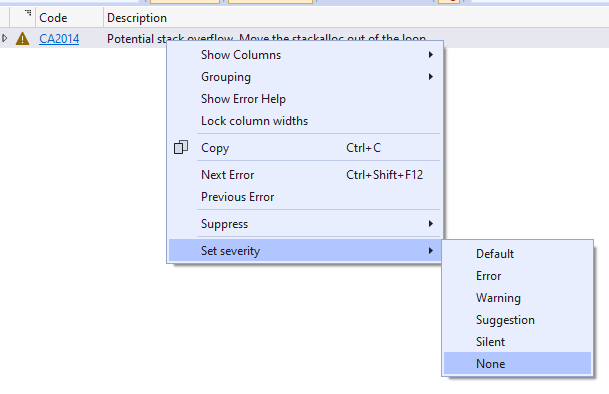
Set Severity From Error List

Or by selecting “None” from the lightbulb menu where the warning appears in the editor
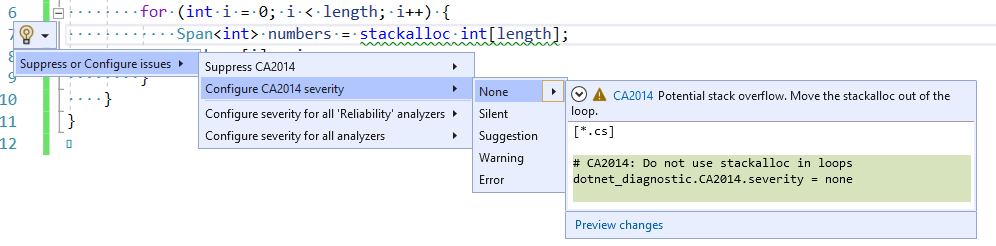
Set Severity From Lightbulb


Turning off a single instance of a warning

If you want a warning to be on almost all the time and only suppress it in a few instances you can use the lightbulb menu to either:
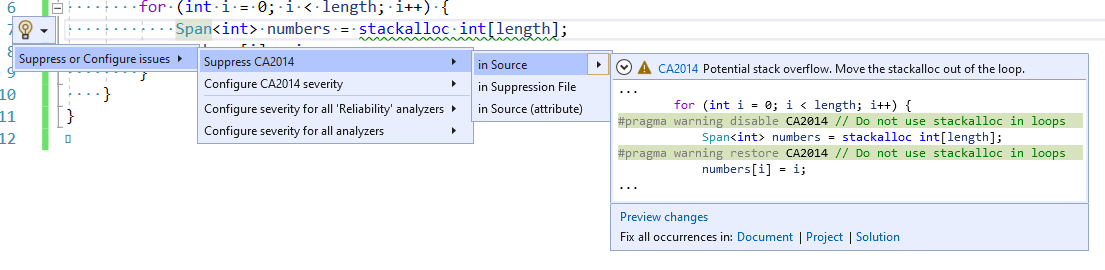
  • Suppress it in source.

Suppress in Source

  • Suppress it in a separate suppression file.
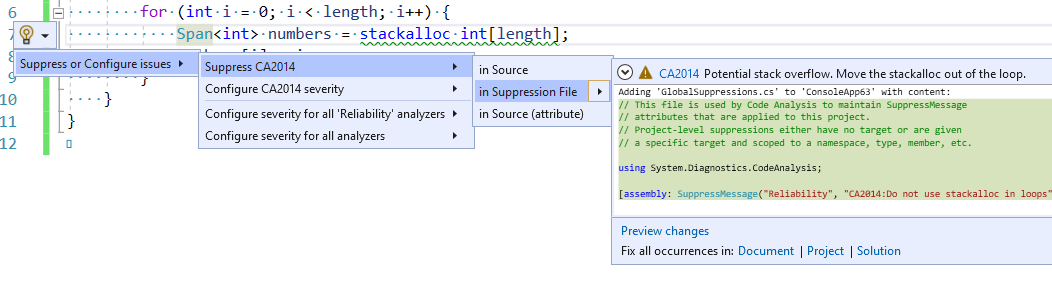
Suppress in Suppression File

  • Suppress it in source with an attribute.
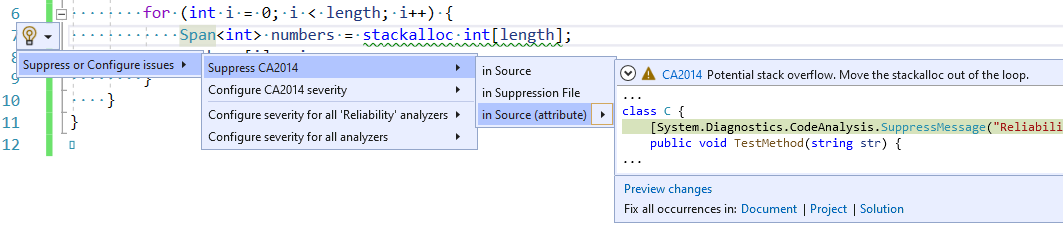
Suppress in Attribute

Summary

I hope this has gotten you excited for all the improvements to code analysis that you can expect in .NET 5 and please give us feedback about this experience.

The post Automatically find latent bugs in your code with .NET 5 appeared first on .NET Blog.


source https://devblogs.microsoft.com/dotnet/automatically-find-latent-bugs-in-your-code-with-net-5/
Intermediate Python Programming Course


Curriculum for the course Intermediate Python Programming Course

Take your Python skills to the next level with this intermediate Python course. First, you will get a review of basic concepts such as lists, strings, and dictionaries, but with an emphasis on some lesser known capabilities. Then, you will learn more advanced topics such as threading, multiprocessing, context managers, generators, and more. 💻 Code: https://github.com/python-engineer/python-engineer-notebooks/tree/master/advanced-python 🎥 Course from Patrick Loeber. Check out his channel: https://www.youtube.com/channel/UCbXgNpp0jedKWcQiULLbDTA 🔗 Written Tutorials from Patrick: https://www.python-engineer.com/courses/advancedpython/ ⭐️ Course Contents ⭐️ ⌨️ (0:00:00) Intro ⌨️ (0:00:56) Lists ⌨️ (0:16:30) Tuples ⌨️ (0:29:49) Dictionaries ⌨️ (0:42:40) Sets ⌨️ (0:58:44) Strings ⌨️ (1:22:50) Collections ⌨️ (1:36:43) Itertools ⌨️ (1:51:50) Lambda Functions ⌨️ (2:04:03) Exceptions and Errors ⌨️ (2:20:10) Logging ⌨️ (2:42:20) JSON ⌨️ (2:59:42) Random Numbers ⌨️ (3:14:23) Decorators ⌨️ (3:35:32) Generators ⌨️ (3:53:29) Threading vs Multiprocessing ⌨️ (4:07:59) Multithreading ⌨️ (4:31:05) Multiprocessing ⌨️ (4:53:26) Function Arguments ⌨️ (5:17:28) The Asterisk (*) Operator ⌨️ (5:30:19) Shallow vs Deep Copying ⌨️ (5:40:07) Context Managers -- Learn to code for free and get a developer job: https://www.freecodecamp.org Read hundreds of articles on programming: https://freecodecamp.org/news And subscribe for new videos on technology every day: https://youtube.com/subscription_center?add_user=freecodecamp

Watch Online Full Course: Intermediate Python Programming Course


Click Here to watch on Youtube: Intermediate Python Programming Course


This video is first published on youtube via freecodecamp. If Video does not appear here, you can watch this on Youtube always.


Udemy Intermediate Python Programming Course courses free download, Plurasight Intermediate Python Programming Course courses free download, Linda Intermediate Python Programming Course courses free download, Coursera Intermediate Python Programming Course course download free, Brad Hussey udemy course free, free programming full course download, full course with project files, Download full project free, College major project download, CS major project idea, EC major project idea, clone projects download free

Announcing Entity Framework Core (EF Core) 5.0 Preview 8

Today, the Entity Framework Core team announces the eighth and final preview release of EF Core 5.0. The next release will be a release candidate (RC). This release includes table-per-type (TPT) mapping, table-valued functions, SQLite table rebuilds for migrations and much more.

                     _/\__
               ---==/    \\
         ___  ___   |.    \|\
        | __|| __|  |  )   \\\
        | _| | _|   \_/ |  //|\\
        |___||_|       /   \\\/\\

  _______ _                 _                                    
 |__   __| |               | |                                   
    | |  | |__   __ _ _ __ | | __  _   _  ___  _   _             
    | |  | '_ \ / _` | '_ \| |/ / | | | |/ _ \| | | |            
    | |  | | | | (_| | | | |   <  | |_| | (_) | |_| |  _   _   _ 
    |_|  |_| |_|\__,_|_| |_|_|\_\  \__, |\___/ \__,_| (_) (_) (_)
                                    __/ |                        
                                   |___/

The EF Core team gives a warm thanks to the nearly 100 community contributors to EF Core 5.0.

Prerequisites

EF Core 5.0 will not run on .NET Standard 2.0 platforms, including .NET Framework.

  • The previews of EF Core 5.0 require .NET Standard 2.1.
  • This means that EF Core 5.0 will run on .NET Core 3.1 and does not require .NET 5.

To summarize: EF Core 5.0 runs on platforms that support .NET Standard 2.1.

The product will maintain .NET Standard 2.1 compatibility through the final release.


How to get EF Core 5.0 previews

EF Core is distributed exclusively as a set of NuGet packages. For example, to add the SQL Server provider to your project, you can use the following command using the dotnet tool:

dotnet add package Microsoft.EntityFrameworkCore.SqlServer --version 5.0.0-preview.8.20407.4

This following table links to the preview 8 versions of the EF Core packages and describes what they are used for.

Package Purpose
Microsoft.EntityFrameworkCore The main EF Core package that is independent of specific database providers
Microsoft.EntityFrameworkCore.SqlServer Database provider for Microsoft SQL Server and SQL Azure
Microsoft.EntityFrameworkCore.SqlServer.NetTopologySuite SQL Server support for spatial types
Microsoft.EntityFrameworkCore.Sqlite Database provider for SQLite that includes the native binary for the database engine
Microsoft.EntityFrameworkCore.Sqlite.NetTopologySuite SQLite support for spatial types
Microsoft.EntityFrameworkCore.Cosmos Database provider for Azure Cosmos DB
Microsoft.EntityFrameworkCore.InMemory The in-memory database provider
Microsoft.EntityFrameworkCore.Tools EF Core PowerShell commands for the Visual Studio Package Manager Console; use this to integrate tools like scaffolding and migrations with Visual Studio
Microsoft.EntityFrameworkCore.Design Shared design-time components for EF Core tools
Microsoft.EntityFrameworkCore.Proxies Lazy-loading and change-tracking proxies
Microsoft.EntityFrameworkCore.Abstractions Decoupled EF Core abstractions; use this for features like extended data annotations defined by EF Core
Microsoft.EntityFrameworkCore.Relational Shared EF Core components for relational database providers
Microsoft.EntityFrameworkCore.Analyzers C# analyzers for EF Core

We also published the 5.0 preview 8 release of the Microsoft.Data.Sqlite.Core provider for ADO.NET.

Installing the EF Core Command Line Interface (CLI)

As with EF Core 3.0 and 3.1, the EF Core CLI is no longer included in the .NET Core SDK. Before you can execute EF Core migration or scaffolding commands, you’ll have to install this package as either a global or local tool.

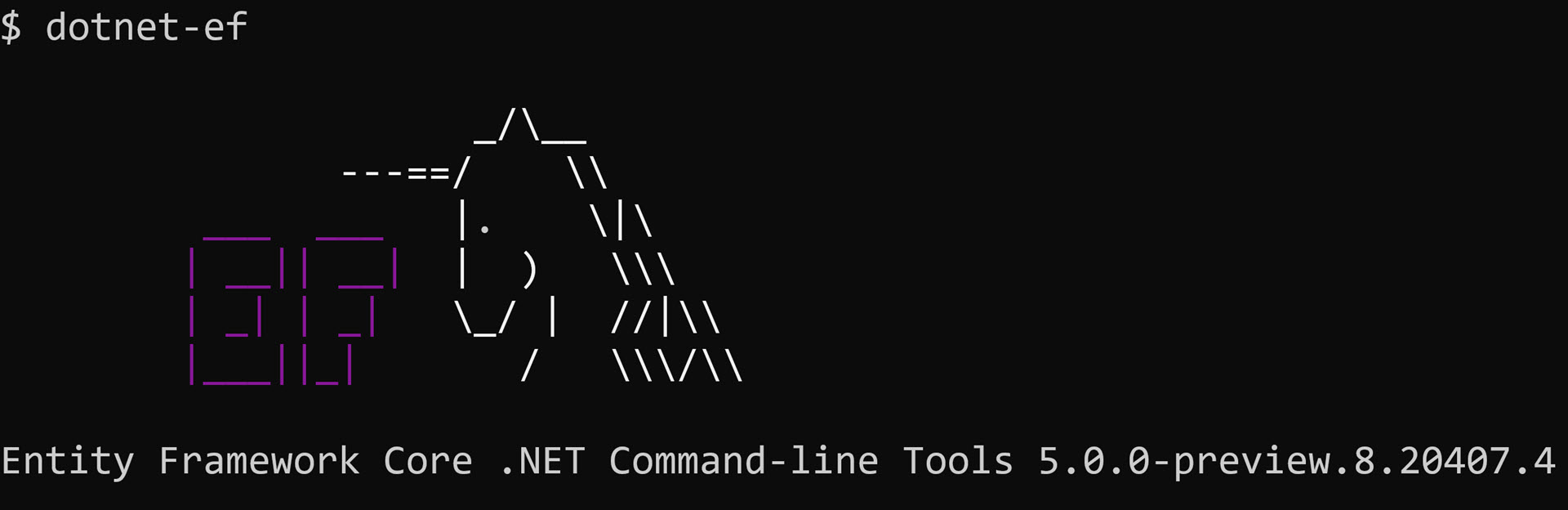
dotnet-ef

To install the preview tool globally the first time, use:

dotnet tool install --global dotnet-ef --version 5.0.0-preview.8.20407.4

If you already have the tool installed, update it with:

dotnet tool update --global dotnet-ef --version 5.0.0-preview.8.20407.4

It’s possible to use this new version of the EF Core CLI with projects that use older versions of the EF Core runtime.


What’s New in EF Core 5 Preview 8

We maintain documentation covering new features introduced into each preview.

Some of the highlights from preview 8 are called out below. This preview also includes several bug fixes.

Table-per-type (TPT) mapping

By default, EF Core maps an inheritance hierarchy of .NET types to a single database table. This is known as table-per-hierarchy (TPH) mapping. EF Core 5.0 also allows mapping each .NET type in an inheritance hierarchy to a different database table; known as table-per-type (TPT) mapping.

For example, consider this model with a mapped hierarchy:

public class Animal
{
    public int Id { get; set; }
    public string Species { get; set; }
}

public class Pet : Animal
{
    public string Name { get; set; }
}

public class Cat : Pet
{
    public string EdcuationLevel { get; set; }
}

public class Dog : Pet
{
    public string FavoriteToy { get; set; }
}

By default, EF Core will map this to a single table:

CREATE TABLE [Animals] (
    [Id] int NOT NULL IDENTITY,
    [Species] nvarchar(max) NULL,
    [Discriminator] nvarchar(max) NOT NULL,
    [Name] nvarchar(max) NULL,
    [EdcuationLevel] nvarchar(max) NULL,
    [FavoriteToy] nvarchar(max) NULL,
    CONSTRAINT [PK_Animals] PRIMARY KEY ([Id])
);

However, mapping each entity type to a different table will instead result in one table per type:

CREATE TABLE [Animals] (
    [Id] int NOT NULL IDENTITY,
    [Species] nvarchar(max) NULL,
    CONSTRAINT [PK_Animals] PRIMARY KEY ([Id])
);

CREATE TABLE [Pets] (
    [Id] int NOT NULL,
    [Name] nvarchar(max) NULL,
    CONSTRAINT [PK_Pets] PRIMARY KEY ([Id]),
    CONSTRAINT [FK_Pets_Animals_Id] FOREIGN KEY ([Id]) REFERENCES [Animals] ([Id]) ON DELETE NO ACTION
);

CREATE TABLE [Cats] (
    [Id] int NOT NULL,
    [EdcuationLevel] nvarchar(max) NULL,
    CONSTRAINT [PK_Cats] PRIMARY KEY ([Id]),
    CONSTRAINT [FK_Cats_Animals_Id] FOREIGN KEY ([Id]) REFERENCES [Animals] ([Id]) ON DELETE NO ACTION,
    CONSTRAINT [FK_Cats_Pets_Id] FOREIGN KEY ([Id]) REFERENCES [Pets] ([Id]) ON DELETE NO ACTION
);

CREATE TABLE [Dogs] (
    [Id] int NOT NULL,
    [FavoriteToy] nvarchar(max) NULL,
    CONSTRAINT [PK_Dogs] PRIMARY KEY ([Id]),
    CONSTRAINT [FK_Dogs_Animals_Id] FOREIGN KEY ([Id]) REFERENCES [Animals] ([Id]) ON DELETE NO ACTION,
    CONSTRAINT [FK_Dogs_Pets_Id] FOREIGN KEY ([Id]) REFERENCES [Pets] ([Id]) ON DELETE NO ACTION
);

Note that creation of the foreign key constraints shown above were added after branching the code for preview 8.

Entity types can be mapped to different tables using mapping attributes:

[Table("Animals")]
public class Animal
{
    public int Id { get; set; }
    public string Species { get; set; }
}

[Table("Pets")]
public class Pet : Animal
{
    public string Name { get; set; }
}

[Table("Cats")]
public class Cat : Pet
{
    public string EdcuationLevel { get; set; }
}

[Table("Dogs")]
public class Dog : Pet
{
    public string FavoriteToy { get; set; }
}

Or using ModelBuilder configuration:

protected override void OnModelCreating(ModelBuilder modelBuilder)
{
    modelBuilder.Entity<Animal>().ToTable("Animals");
    modelBuilder.Entity<Pet>().ToTable("Pets");
    modelBuilder.Entity<Cat>().ToTable("Cats");
    modelBuilder.Entity<Dog>().ToTable("Dogs");
}

Documentation is tracked by issue #1979.

Migrations: Rebuild SQLite tables

Compared to other database, SQLite is relatively limited in its schema manipulation capabilities. For example, dropping a column from an existing table requires that the entire table be dropped and re-created. EF Core 5.0 Migrations now supports automatic rebuilding the table for schema changes that require it.

For example, imagine we have a Unicorns table created for a Unicorn entity type:

public class Unicorn
{
    public int Id { get; set; }
    public string Name { get; set; }
    public int Age { get; set; }
}
CREATE TABLE "Unicorns" (
    "Id" INTEGER NOT NULL CONSTRAINT "PK_Unicorns" PRIMARY KEY AUTOINCREMENT,
    "Name" TEXT NULL,
    "Age" INTEGER NOT NULL
);

We then learn that storing the age of a unicorn is considered very rude, so let’s remove that property, add a new migration, and update the database. This update will fail when using EF Core 3.1 because the column cannot be dropped. In EF Core 5.0, Migrations will instead rebuild the table:

CREATE TABLE "ef_temp_Unicorns" (
    "Id" INTEGER NOT NULL CONSTRAINT "PK_Unicorns" PRIMARY KEY AUTOINCREMENT,
    "Name" TEXT NULL
);

INSERT INTO "ef_temp_Unicorns" ("Id", "Name")
SELECT "Id", "Name"
FROM Unicorns;

PRAGMA foreign_keys = 0;

DROP TABLE "Unicorns";

ALTER TABLE "ef_temp_Unicorns" RENAME TO "Unicorns";

PRAGMA foreign_keys = 1;

Notice that:

  • A temporary table is created with the desired schema for the new table
  • Data is copied from the current table into the temporary table
  • Foreign key enforcement is switched off
  • The current table is dropped
  • The temporary table is renamed to be the new table

Documentation is tracked by issue #2583.

Table-valued functions

This feature was contributed from the community by @pmiddleton. Many thanks for the contribution!

EF Core 5.0 includes first-class support for mapping .NET methods to table-valued functions (TVFs). These functions can then be used in LINQ queries where additional composition on the results of the function will also be translated to SQL.

For example, consider this TVF defined in a SQL Server database:

create FUNCTION GetReports(@employeeId int)
RETURNS @reports TABLE
(
    Name nvarchar(50) not null,
    IsDeveloper bit not null
)
AS
begin
    WITH cteEmployees AS
    (
        SELECT id, name, managerId, isDeveloper
        FROM employees
        WHERE id = @employeeId
        UNION ALL
        SELECT e.id, e.name, e.managerId, e.isDeveloper
        FROM employees e
        INNER JOIN cteEmployees cteEmp ON cteEmp.id = e.ManagerId
    )

    insert into @reports
    select name, isDeveloper
    FROM cteEmployees
    where id != @employeeId

    return
end

The EF Core model requires two entity types to use this TVF:

  • An Employee type that maps to the Employees table in the normal way
  • A Report type that matches the shape returned by the TVF
public class Employee
{
    public int Id { get; set; }
    public string Name { get; set; }
    public bool IsDeveloper { get; set; }

    public int? ManagerId { get; set; }
    public virtual Employee Manager { get; set; }
}
public class Report
{
    public string Name { get; set; }
    public bool IsDeveloper { get; set; }
}

These types must be included in the EF Core model:

modelBuilder.Entity<Employee>();
modelBuilder.Entity(typeof(Report)).HasNoKey();

Notice that Report has no primary key and so must be configured as such.

Finally, a .NET method must be mapped to the TVF in the database. This method can be defined on the DbContext using the new FromExpression method:

public IQueryable<Report> GetReports(int managerId)
    => FromExpression(() => GetReports(managerId));

This method uses a parameter and return type that match the TVF defined above. The method is then added to the EF Core model in OnModelCreating:

modelBuilder.HasDbFunction(() => GetReports(0));

(Using a lambda here is an easy way to pass the MethodInfo to EF Core. The arguments passed to the method are ignored.)

We can now write queries that call GetReports and compose over the results. For example:

from e in context.Employees
from rc in context.GetReports(e.Id)
where rc.IsDeveloper == true
select new
{
  ManagerName = e.Name,
  EmployeeName = rc.Name,
})

On SQL Server, this translates to:

SELECT [e].[Name] AS [ManagerName], [g].[Name] AS [EmployeeName]
FROM [Employees] AS [e]
CROSS APPLY [dbo].[GetReports]([e].[Id]) AS [g]
WHERE [g].[IsDeveloper] = CAST(1 AS bit)

Notice that the SQL is rooted in the Employees table, calls GetReports, and then adds an additional WHERE clause on the results of the function.

Flexible query/update mapping

EF Core 5.0 allows mapping the same entity type to different database objects. These objects may be tables, views, or functions.

For example, an entity type can be mapped to both a database view and a database table:

protected override void OnModelCreating(ModelBuilder modelBuilder)
{
    modelBuilder
        .Entity<Blog>()
        .ToTable("Blogs")
        .ToView("BlogsView");
}

By default, EF Core will then query from the view and send updates to the table. For example, executing the following code:

var blog = context.Set<Blog>().Single(e => e.Name == "One Unicorn");

blog.Name = "1unicorn2";

context.SaveChanges();

Results in a query against the view, and then an update to the table:

SELECT TOP(2) [b].[Id], [b].[Name], [b].[Url]
FROM [BlogsView] AS [b]
WHERE [b].[Name] = N'One Unicorn'

SET NOCOUNT ON;
UPDATE [Blogs] SET [Name] = @p0
WHERE [Id] = @p1;
SELECT @@ROWCOUNT;

Context-wide split-query configuration

Split queries (see below) can now be configured as the default for any query executed by the DbContext. This configuration is only available for relational providers, and so must be specified as part of the UseProvider configuration. For example:

protected override void OnConfiguring(DbContextOptionsBuilder optionsBuilder)
    => optionsBuilder
        .UseSqlServer(
            Your.SqlServerConnectionString,
            b => b.UseQuerySplittingBehavior(QuerySplittingBehavior.SplitQuery));

Documentation is tracked by issue #2407.

PhysicalAddress mapping

This feature was contributed from the community by @ralmsdeveloper. Many thanks for the contribution!

The standard .NET PhysicalAddress class is now automatically mapped to a string column for databases that do not already have native support. For more information, see the examples for IPAddress below.


Daily builds

EF Core previews are aligned with .NET 5 previews. These previews tend to lag behind the latest work on EF Core. Consider using the daily builds instead to get the most up-to-date EF Core features and bug fixes.

As with the previews, the daily builds do not require .NET 5; they can be used with GA/RTM release of .NET Core 3.1.


Contribute to .NET 5

The .NET documentation team is reorganizing .NET content to better match the workloads you build with .NET. This includes a new .NET Data landing page that will link out to data-related topics ranging from EF Core to APIs, Big Data, and Machine learning. The planning and execution will be done completely in the open on GitHub. This is your opportunity to help shape the hierarchy and content to best fit your needs as a .NET developer. We look forward to your contributions!

The EF Core Community Standup

The EF Core team is now live streaming every other Wednesday at 10am Pacific Time, 1pm Eastern Time, or 17:00 UTC. Join the stream to ask questions about the EF Core topic of your choice, including the latest preview release.

Documentation and Feedback

The starting point for all EF Core documentation is docs.microsoft.com/ef/.

Please file issues found and any other feedback on the dotnet/efcore GitHub repo.

The following short links are provided for easy reference and access.

Main documentation: https://aka.ms/efdocs

Issues and feature requests for EF Core: https://aka.ms/efcorefeedback

Entity Framework Roadmap: https://aka.ms/efroadmap

What’s new in EF Core 5.x? https://aka.ms/efcore5


Thank you from the team

A big thank you from the EF team to everyone who has used EF over the years!

ajcvickers Arthur Vickers AndriySvyryd Andriy Svyryd Brice Lambson JeremyLikness Jeremy Likness
maumar Maurycy Markowski roji Shay Rojansky smitpatel Smit Patel  

Thank you to our contributors!

A big thank you to the following community members who have already contributed code or documentation to the EF Core 5 release! (List is in chronological order of first contribution to EF Core 5).

aevitas aevitas alaatm Alaa Masoud aleksandar-manukov Aleksandar Manukov amrbadawy Amr Badawy
AnthonyMonterrosa Anthony Monterrosa bbrandt Ben Brandt benmccallum Ben McCallum ccjx Clarence Cai
CGijbels Christophe Gijbels cincuranet Jiri Cincura Costo Vincent Costel dshuvaev Dmitry Shuvaev
EricStG Eric St-Georges ErikEJ Erik Ejlskov Jensen gravbox Christopher Davis ivaylokenov Ivaylo Kenov
jfoshee Jacob Foshee jmzagorski Jeremy Zagorski jviau Jacob Viau knom Max K.
lohoris-crane lohoris-crane loic-sharma Loïc Sharma lokalmatador lokalmatador mariusGundersen Marius Gundersen
Marusyk Roman Marusyk matthiaslischka Matthias Lischka MaxG117 MaxG117 MHDuke MHDuke
mikes-gh Mike Surcouf Muppets Neil Bostrom nmichels Nícolas Michels OOberoi Obi Oberoi
orionstudt Josh Studt ozantopal Ozan Topal pmiddleton Paul Middleton prog-rajkamal Raj
ptjhuang Peter Huang ralmsdeveloper Rafael Almeida Santos redoz Patrik Husfloen rmarskell Richard Marskell
sguitardude sguitardude SimpleSamples Sam Hobbs svengeance Sven VladDragnea Vlad
vslee vslee WeihanLi liweihan Youssef1313 Youssef Victor 1iveowl 1iveowl
thomaslevesque Thomas Levesque akovac35 Aleksander Kovač leotsarev Leonid Tsarev kostat Konstantin Triger
sungam3r Ivan Maximov dzmitry-lahoda Dzmitry Lahoda Logerfo Bruno Logerfo witheej Josh Withee
FransBouma Frans Bouma IGx89 Matthew Lieder paulomorgado Paulo Morgado mderriey Mickaël Derriey
LaurenceJKing Laurence King oskarj Oskar Josefsson bdebaere bdebaere BhargaviAnnadevara-MSFT Bhargavi Annadevara
AlexanderTaeschner Alexander Täschner Jesse-Hufstetler Jesse Hufstetler ivarlovlie Ivar Løvlie cucoreanu cucoreanu
serpent5 Kirk Larkin sdanyliv Svyatoslav Danyliv twenzel Toni Wenzel manvydasu manvydasu
brandongregoryscott Brandon Scott uncheckederror Thomas Ryan rocke97 Aaron Gunther jonlouie Jon Louie
mohsinnasir Mohsin Nasir seekingtheoptimal Bálint Szabó MartinBP Martin Boye Petersen Ropouser Duje Đaković< /td>
codemillmatt Matt Soucoup shahabganji Saeed Ganji AshkanAbd Ashkan Abd ChristopherHaws Christopher Haws
SergerGood Sergei Khlebnikov KaloyanIT Kaloyan Kostov bide45 bide45 jsportaro Joseph Portaro
mikewodarczyk Mike Wodarczyk jeffsvajlenko Jeffrey Svajlenko vanillajonathan Jonathan m4ss1m0g Massimo Giambona
Psypher9 Turner Bass

The post Announcing Entity Framework Core (EF Core) 5.0 Preview 8 appeared first on .NET Blog.


source https://devblogs.microsoft.com/dotnet/announcing-entity-framework-core-ef-core-5-0-preview-8/

Share this post

Search This Blog

What's New

The "AI is going to replace devs" hype is over – 22-year dev veteran Jason Lengstorf [Podcast #201]

Image
Curriculum for the course The "AI is going to replace devs" hype is over – 22-year dev veteran Jason Lengstorf [Podcast #201] Today Quincy Larson interviews Jason Lengstorf. He's a college dropout who taught himself programming while building websites for his emo band. 22 years later he's worked as a developer at IBM, Netlify, run his own dev consultancy, and he now runs CodeTV making reality TV shows for developers. We talk about: - How many CEOs over-estimated the impact of AI coding tools and laid off too many devs, whom they're now trying to rehire - Why the developer job market has already rebounded a bit, but will never be the same - Tips for how to land roles in the post-LLM résumé spam job search era - How devs are working to rebuild the fabric of the community through in-person community events Support for this podcast is provided by a grant from AlgoMonster. AlgoMonster is a platform that teaches data structure and algorithm patterns in a structure...

Labels

Programming Video Tutorials Coursera Video Tutorials Plurasight Programming Tutorials Udemy Tutorial C# Microsoft .Net Dot Net Udemy Tutorial, Plurasight Programming Tutorials, Coursera Video Tutorials, Programming Video Tutorials Asp.Net Core Asp.Net Programming AWS Azure GCP How To WordPress Migration C sharp AWS Project Git Commands FREE AWS Tutorial OldNewThings Git Tutorial Azure vs AWS vs GCP New in .Net javascript AI Google I/O 2025 Wordpress jquery Generative Video Git Git Squash Google Flow AI PHP SQL Veo 3 squash commit CSS Cloud Services React Tutorial With Live Project Source Code git rebase CPR Nummer Dropdown Reset Javascript Figma Figma Beginner Tutorial Geolocation Non-Programmer Content Python Free Course Think Simply Awesome Tutorial UI UX Live Project UI/UX Full Course Wireframing dotnet core runtime error html API Gateway AWS EKS vs Azure AKS All in one WP stuck C++ C++ Coroutines CPR Denmark ChatGPT Cloud Database Cloud DevOps Cloud Security Cloud Storage Contact Form 7 Dropdown Unselect Javascript E commerce Free AWS Terraform Project Training Git Commit Google Drive Files Google Drive Tips Http Error 500.30 Http Error 500.31 Interview Questions Learn Courutines C++ Microservices for Live Streaming PII Denmark Pub Sub SQL Server SSIS Terraform Course Free Terraform Tutorial Free USA E commerce strategies UpdraftPlus UpdraftPlus Manual Restore Website Optimization Strategies dropdown javascript select drop down javascript smarttube apk error 403 smarttube next 403 Error 413 Error 503 504 524 AI & ML AI Assistants AI Course CS50 AI in daily life AWS API Gateway AWS EBS AWS EC2 vs Azure VMs vs GCP Compute Engine AWS EFS AWS IAM AWS Lamda AWS RDS vs Azure SQL AWS Redshift AWS S3 AZ-104 AZ-104 Free Course AZ-104 Full Course AZ-104 Pass the exam Abstract Class C# Abstract Method Ajax Calender Control Ajax Control Toolkit All In One Extension Compatibility All In One WP Freeze All In One WP Migration All in one WP All-in-One WP Migration Android 15 Android TV Applying Theme html Asp.net core runtime Error Audio Auto Complete Azure AD Azure APIM Azure Administrator Certification Azure Blob Storage Azure Data Lake Azure Files Azure Function Azure Managed Disk Azure Synapse Base Class Child Class Best Grocery Price Big Data BigBasket vs Grofers Bing Homepage Quiz Blogger Import Blogger Post Import Blogger XML Import Bluetooth Connectivity Browser Detail Building Real-Time Web Applications Bulk Insert CI/CD CPR Address Update CPR Generator CPR Generator Denmark CS50 AI Course CS50 AI Python Course CS50 Artificial Intelligence Full Course CVR Centrale Virksomhedsregister Change Workspace TFS ChatGPT Essay Guide ChatGPT Usage ChatGPT vs Humans Cloud API Management Cloud CDN Cloud Computing Cloud Data Warehouse Cloud Event Streaming Cloud IAM Cloud Messaging Queue Cloud Monitoring and Logging Cloud Networking CloudFront Cloudflare Cloudwatch Compute Services Connect a Bluetooth Device to my PC site:microsoft.com Containers ControlService FAILED 1062 Corona Lockdown MP CosmosDB Covid19 Covid19 Bhopal Covid19 Home Delivery MP Covid19 Indore Covid19 Susner Covid19 Ujjain Cypress Javascript Cypress Javascript framework Cypress Javascript testing Cypress Javascript tutorial Cypress Javascript vs typescript DNS Danish CVR Data Analytics Data Analytics Course Free Data Engineering Data Structure Full Course Data Visualization Database Database Diagram Visualizer Davek Na Dodano Vrednost Dbdiagram export seeder Deep Learning Course Denmark Numbers Det Centrale Personregister Det Centrale Virksomhedsregister DevOps Device Compatibility Dictionary Dictionary in C# Digital Economy Disaster Recovery for Web Applications Disaster-Proof Infrastructure Dmart Frenchise Dmart Home Delibery Dmart Mumbai Address Dmart Pickup Points Doodle Jump Drive Images On Blog Drive Images On Website Driver Problems DropDown Dropbox Dropdown jquery DynamoDB ETL ETL Package Ecommerce Store using AWS & React Embed Drive Images Escape Sequences in c#.Net Event Hub Explicit Join Extract Facebook App Fake CVR Denmark Fake DDV Slovenia Fake VAT Number Fake Virk Number Faker Feature Toggle Find CPR Information Find a Word on Website Firestore Flappy Bird Game Form Selectors using jQuery Free React Portfolio Template FreeCodeCamp Frontend Best Practices for Millions of Users Full Text Index View G Drive Hosting GAN certification course GCP Cloud Data Lake GCP Filestore GCP Functions GCP IAM GCP Persistent Disk Gemini Git Checkout Google Adsense Setting Google Beam Google BigQuery Google Conversion Tracking Google Docs Advanced Tutorial Google Drive Clone Google Drive Clone Bot Google Drive Clone HTML CSS Google Drive Clone PHP Google Drive Clone React Google Drive Clone Tutorial Google Drive Clone VueJS Google Drive File Sharing Google Drive Images Google Drive Sharing Permissions Grocery Price Compare Online Grocery in Corona Grocery in Covid19 Grofers vs DMart vs Big basket HAXM installation HTML Storage HTML to PDF Javascript HTML2Canvas HTML5 HTML5 Append Data HTML5 Audio HTML5 Data Storage HTML5 Storage HTML5 Video Harvard University AI Course Header Sent Height Jquery High Availability in Live Streaming Platforms High-Concurrency Frontend Design High-Concurrency Web Applications How to Search for a Word on Mac Html2Canvas Black Background issue Http Error 413 Http Error 500.35 IIS INNER Join Image Gallery Blogger Image Gallery Blogger Picasa Image Gallery Blogger Template Image Gallery Blogger Template Free Implicit Join Indexing in SQL Instagram Clone React Instagram Clone Script Install NodeJS Ubuntu Internet Infrastructure Interview IoT IoT Core IoT Hub JS Game Tutorial Java Feature Toggle Javascript game tutorial JioCinema Case Study Keep Me Login Key Management Kinesis Learn Scrappy with a live project List Live Streaming Data Delivery Live Streaming Performance Optimization Load Load Balancer Looping Dictionary MTech First Semester Syllabus MTech Syllabus MVC Mac Mac Finder Shortcut Media Controller Media Group Attribute Microservices Architecture for Scalability Missing MySQL Extension Mobile Optimization Multiple Audio Sync Multiple Video Sync Mumbai Dmart List MySQL MySQL ERD Generator Next.js Beginner Tutorial Ngnix NodeJS NodeJS Ubuntu Commands Numpy OOPS Concepts OOPS in C# Object Oriented Programming Object Storage Outer Join PHP Installation Error PHP WordPress Installation Error Pandas Personligt identifikations nummer Pipedrive Pipedrive Quickbooks Integration Portfolio Website using React Project Astra PyTorch Quickbooks Quote Generator RGPV Syllabus Download Random SSN Generator ReCaptcha Dumbass React Feature Toggle Real-Time Video Processing Architecture Real-Time Video Processing Backend RegExp Regular Expression Reinstall Bluetooth Drivers Remember Me Remove NodeJS Ubuntu Renew DHCP Lease Reset IP Address Linux Reset IP Address Mac Reset IP Address Windows Reset Remote Connection Reset Remote Connection Failure Resize Textarea Restore Errors Restore Failed UpdraftPlus Route 53 SOS Phone SQL Indexed Tables SQL Joins SQL Seed generator SQS SSIS Package SSIS Tutorial SSN Generator for Paypal SSN Number SSN Number Generator SSN Validator Safari 8 Safari Video Delay SageMaker Scalable Backend for High Concurrency Scalable Cloud Infrastructure for Live Streaming Scalable Frontend Architectures Scalable Live Streaming Architecture Scrapy course for beginners Search A word Search for a Word in Google Docs Secret Management Serverless Service Bus Slovenian VAT Generator SmartTube Software Architect Interview Questions Software Architect Mock Interview Sparse Checkout Spotlight Mac Shortcut Stored Procedure Subtree Merge T-Mobile IMEI Check TFS TMobile IMEI check unlock Team Foundation Server Terraform Associate Certification Training Free Text Search Text color Textarea Resize Jquery Theme Top WordPress Plugins Transform Trim javascript Troubleshooting TypeScript Beginner Tutorial Ubuntu Unleash Feature Toggle Update Computer Name UpdraftPlus 500 UpdraftPlus Backup Restore UpdraftPlus Error 500 UpdraftPlus Error 504 UpdraftPlus Error 524 UpdraftPlus HTTP Error UpdraftPlus New Domain UpdraftPlus Restore Not Working UpdraftPlus Troubleshooting Upstream Reset Error Use Google Drive Images VAT Number Generator Verizon imei check Verizon imei check paid off Verizon imei check unlock Verizon imei check\ Version Control Vertex AI Video View Indexing SQL Views in SQL Virksomhedsregister Virtual friends Visual Studio 2013 WHERE Clause WHPX expo Web Security Web scraping full course with project Web3 What is Feature Toggle WordPress Backup Troubleshooting WordPress Backup UpdraftPlus WordPress Database Backup WordPress Error 503 WordPress Installation Error WordPress Migration UpdraftPlus Wordpress Restore Workspaces Commands Your ip has been banned Zero Click angle between two points bing homepage quiz answers bing homepage quiz answers today bing homepage quiz not working bing homepage quiz reddit bing homepage quiz today byod Verizon imei check chatgpt essay example chatgpt essay writer chatgpt essay writing check tmobile imei contact form 7 captcha contact form 7 captcha plugin contact form 7 recaptcha v3 cpr-nummer engelsk cpr-nummer liste cpr-nummer register cpr-nummer tjek dbdiagram dom load in javascript dotnet core hosting bundle dotnet failed to load dotnet runtime error get url in php how to search for a word on a page how to search for a word on a page windows ipconfig release is cypress javascript istio transport failure jQuery AutoComplete jQuery Input Selector jQuery Menu jQuery Options joins in mySql jquery selector jquery selectors jsPDF jsPDF images missing key key-value keypress event in jQuery kubernetes upstream error localStorage metro by t-mobile imei check nemid cpr-nummer react native expo setup react native on Windows react native setup recaptcha v3 contact form 7 recaptcha wordpress contact form 7 reset connection failure resize control jQuery response code 403 smarttube round number in javascript select sessionStorage smarttube 403 エラー smarttube apk smarttube beta smarttube download smarttube reddit smarttube unknown source error 403 smartube sos iphone top right sos on iphone 13 sos only iphone substr substr in javascript tmobile imei tmobile imei check paid off tmobile imei number total by Verizon imei check trim trim jquery turn off sos iphone turn off sos on iphone 11 unknown source error 403 unknown source error response code 403 smarttube upstream connect error url in php view hidden files mac finder zuegQmMdy8M ошибка 403 smarttube
  • ()
  • ()
Show more
an "open and free" initiative. Powered by Blogger.