Lanyon A Simple Blogger template

Free tutorials, courses, generative tools, and projects built with Javascript, PHP, Python, ML, AI,.Net, C#, Microsoft, Youtube, Github Code Download and more.

December 2021

Archive for December 2021

Learn to Code RPG - A freeCodeCamp.org Game [playthrough]


Curriculum for the course Learn to Code RPG - A freeCodeCamp.org Game [playthrough]

You didn't realize you needed this until now: A brand new game from freeCodeCamp. Learn all about Learn To Code RPG from game creator Lynn Zheng and watch a playthough from Ania Kubów. Get the game on Itch: https://freecodecamp.itch.io/learn-to-code-rpg Get the game on GitHub: https://github.com/freeCodeCamp/LearnToCodeRPG

Watch Online Full Course: Learn to Code RPG - A freeCodeCamp.org Game [playthrough]


Click Here to watch on Youtube: Learn to Code RPG - A freeCodeCamp.org Game [playthrough]


This video is first published on youtube via freecodecamp. If Video does not appear here, you can watch this on Youtube always.


Udemy Learn to Code RPG - A freeCodeCamp.org Game [playthrough] courses free download, Plurasight Learn to Code RPG - A freeCodeCamp.org Game [playthrough] courses free download, Linda Learn to Code RPG - A freeCodeCamp.org Game [playthrough] courses free download, Coursera Learn to Code RPG - A freeCodeCamp.org Game [playthrough] course download free, Brad Hussey udemy course free, free programming full course download, full course with project files, Download full project free, College major project download, CS major project idea, EC major project idea, clone projects download free

Build a CRM with Google Sheets + PostgreSQL + Stripe API Tutorial (Ecommerce Course)


Curriculum for the course Build a CRM with Google Sheets + PostgreSQL + Stripe API Tutorial (Ecommerce Course)

Build a CRM (Customer Relationship Management tool) using the Retool low-code platform. We will be learning how to use the Google Sheet API, Stripe API, SMTP API as well as a PostgreSQL database. ✏️ Ania Kubow created this course. Check out her channel: https://www.youtube.com/aniakubow 🔗 Google sheet data: https://docs.google.com/spreadsheets/d/1aKglh0-w8dwyKssc9CJwKiOqTc-COPCuyx4zXnuv3Wg/edit?usp=sharing 🔗 Postgresql data: https://github.com/harryho/db-samples/blob/master/pgsql/northwind.sql ⭐️ Course Contents ⭐️ ⌨️ (0:00:00) Introduction ⌨️ (0:04:10) Getting started ⌨️ (0:06:24) Getting Data using the Google Sheets API ⌨️ (0:08:57) Creating Tables ⌨️ (0:38:05) Adding Data using the Google Sheets API ⌨️ (1:01:00) Deleting Data using the Google Sheets API ⌨️ (1:05:10) Processing refunds with the Stripe API ⌨️ (1:26:20) Sending emails with SMTP ⌨️ (1:45:21) Migrating to PostgreSQL 🎉 Thanks to our Champion and Sponsor supporters: 👾 Raymond Odero 👾 Agustín Kussrow 👾 aldo ferretti 👾 Otis Morgan 👾 DeezMaster -- Learn to code for free and get a developer job: https://www.freecodecamp.org Read hundreds of articles on programming: https://freecodecamp.org/news And subscribe for new videos on technology every day: https://youtube.com/subscription_center?add_user=freecodecamp

Watch Online Full Course: Build a CRM with Google Sheets + PostgreSQL + Stripe API Tutorial (Ecommerce Course)


Click Here to watch on Youtube: Build a CRM with Google Sheets + PostgreSQL + Stripe API Tutorial (Ecommerce Course)


This video is first published on youtube via freecodecamp. If Video does not appear here, you can watch this on Youtube always.


Udemy Build a CRM with Google Sheets + PostgreSQL + Stripe API Tutorial (Ecommerce Course) courses free download, Plurasight Build a CRM with Google Sheets + PostgreSQL + Stripe API Tutorial (Ecommerce Course) courses free download, Linda Build a CRM with Google Sheets + PostgreSQL + Stripe API Tutorial (Ecommerce Course) courses free download, Coursera Build a CRM with Google Sheets + PostgreSQL + Stripe API Tutorial (Ecommerce Course) course download free, Brad Hussey udemy course free, free programming full course download, full course with project files, Download full project free, College major project download, CS major project idea, EC major project idea, clone projects download free

Internet History, Technology, and Security - Full Course from Dr. Chuck


Curriculum for the course Internet History, Technology, and Security - Full Course from Dr. Chuck

Learn about the history of the Internet. In this course you will learn how the Internet was created, who created it, and how it works. Along the way you will meet many of the innovators who developed the Internet and Web technologies that we use today. 🔗 Course website: https://ihts.pr4e.com/ ✏️ Dr. Charles Severance developed this course. He is a Clinical Professor at the University of Michigan School of Information, where he teaches various technology-oriented courses including programming, database design, and Web development. ⭐️ Course Contents ⭐️ ⌨️ (0:00:00) Introduction ⌨️ (0:09:28) High Stakes Research in Computing and Communication ⌨️ (0:16:50) IEEE Computer: Alan Turing at Bletchley Park ⌨️ (0:41:39) The "First" Electronic Computers Around the World ⌨️ (0:44:30) Monash Museum of Computing History Interviews ⌨️ (0:51:33) Post-War Computing and Communication ⌨️ (1:03:28) Early Academic Networking Research ⌨️ (1:19:04) Len Kleinrock: The First Two Packets on the Internet ⌨️ (1:32:06) Packet Switched Networks ⌨️ (1:37:47) Computing Conversations: Len Kleinrock on the Theory of Packets ⌨️ (1:48:30) Packet Switching and the ARPANET ⌨️ (1:49:50) Katie Hafner on the history of the ARPANET project ⌨️ (2:01:54) Supercomputers as Technology Drivers ⌨️ (2:05:38) Networked Computing, lecture by Larry Smarr on Scientific Computing ⌨️ (2:16:36) From Super Computers to NSFNet ⌨️ (2:19:57) Doug Van Houweling: Building the NSFNet ⌨️ (2:32:13) Expanding NSFNet Around the World ⌨️ (2:34:42) Nii Quaynor: Bringing the Internet to Africa ⌨️ (2:47:28) The World-Wide-Web Emerges at CERN ⌨️ Collider by the cernettes: https://youtu.be/1e1eLe1ihT0 ⌨️ (2:51:28) Building the Web Around the World ⌨️ (3:26:38) Steve Job's Second-Order Effects (High resolution) ⌨️ (3:39:01) Mosaic at NCSA - The Browser for Everybody ⌨️ (3:43:01) Joseph Hardin: NCSA Mosaic ⌨️ (3:57:12) Reflecting on Mosaic ⌨️ (4:01:22) Computing Conversations with Brendan Eich ⌨️ (4:13:38) Computing Conversations: Mitchell Baker on the Mozilla Foundation ⌨️ (4:32:29) The Web, the World, and the Economy ⌨️ (4:51:05) Computing Conversations: Brian Behlendorf on the Apache Software Foundation ⌨️ (4:55:39) Open Source Wrap Up ⌨️ (4:56:06) Introduction: Link Layer ⌨️ (5:22:11) Computing Conversations: Bob Metcalfe on the First Ethernet LAN ⌨️ (5:39:03) The InterNetwork Protocol (IP) ⌨️ (6:14:35) Computing Conversations: Vint Cerf on the History of Packets ⌨️ (6:30:33) DNS - The Domain Name System ⌨️ (6:38:16) Transport Layer ⌨️ (6:47:45) Van Jacobson: The Slow-Start Algorithm ⌨️ (6:59:32) TCP Wrap Up ⌨️ (7:01:38) Application Layer ⌨️ (7:26:59) Security Introduction ⌨️ (7:29:22) Bruce Schneier: The Security Mindset ⌨️ (7:36:54) Understanding Security ⌨️ (7:46:08) Encryption and Confidentiality ⌨️ (8:06:56) Cryptographic Hashes and Integrity ⌨️ (8:15:47) Bruce Schneier: Building Cryptographic Systems ⌨️ (8:27:06) Hashing and Digital Signatures ⌨️ (8:48:54) Security Public/Private Key - Secure Sockets ⌨️ (9:08:23) Security - Integrity and Certificate Authorities 🎉 Thanks to our Champion and Sponsor supporters: 👾 Raymond Odero 👾 Agustín Kussrow 👾 aldo ferretti 👾 Otis Morgan 👾 DeezMaster -- Learn to code for free and get a developer job: https://www.freecodecamp.org Read hundreds of articles on programming: https://freecodecamp.org/news And subscribe for new videos on technology every day: https://youtube.com/subscription_center?add_user=freecodecamp

Watch Online Full Course: Internet History, Technology, and Security - Full Course from Dr. Chuck


Click Here to watch on Youtube: Internet History, Technology, and Security - Full Course from Dr. Chuck


This video is first published on youtube via freecodecamp. If Video does not appear here, you can watch this on Youtube always.


Udemy Internet History, Technology, and Security - Full Course from Dr. Chuck courses free download, Plurasight Internet History, Technology, and Security - Full Course from Dr. Chuck courses free download, Linda Internet History, Technology, and Security - Full Course from Dr. Chuck courses free download, Coursera Internet History, Technology, and Security - Full Course from Dr. Chuck course download free, Brad Hussey udemy course free, free programming full course download, full course with project files, Download full project free, College major project download, CS major project idea, EC major project idea, clone projects download free

Announcing the Plan for EF7

Today we are excited to share with you the plan for Entity Framework Core 7. This plan brings together input from many stakeholders and outlines where and how we intend to invest in Entity Framework Core 7 (EF Core 7). For brevity, EF Core 7.0 is also referred to as just EF7.

The plan is being tracked through GitHub dotnet/efcore repo issue #26994 and any updates will be posted there.

IMPORTANT This plan is not a commitment; it will evolve as we continue to learn throughout the release. Some things not currently planned for EF7 may get pulled in. Some things currently planned for EF7 may get punted out.

To review the plans for other products, areas, and .NET 7 overall, visit and read the ThemesOf.Net.

General information

EF Core 7 is the next release after EF Core 6 and is currently scheduled for release in November 2022 at the same time as .NET 7. There are no plans for an EF Core 6.1 release.

EF7 will align with the .NET support policy and will therefore will not be a long-term support (LTS) release.

EF7 currently targets .NET 6. This may be updated to .NET 7 as we near the release. EF7 does not target any .NET Standard version; for more information see the future of .NET Standard. EF7 will not run on .NET Framework.

Themes

The large investments in EF7 will fall mainly under the following themes.

Highly requested features

As always, a major input into the planning process comes from votes (👍) for features on GitHub.

.NET platforms and ecosystem

Much of the work planned for EF7 involves improving the data access experience for .NET across different platforms and domains. This involves work in EF Core where needed, but also work in other areas to ensure a great experience across .NET technologies.

Clear path forward from EF6

EF Core has always supported many scenarios not covered by the legacy EF6 stack, as well as being generally much higher performing. However, EF6 has likewise supported scenarios not covered by EF Core. EF7 will add support for many of these scenarios, allowing more applications to port from legacy EF6 to EF7. At the same time, we are planning a comprehensive porting guide for applications moving from legacy EF6 to EF Core.

Performance

Great performance is a fundamental tenet of EF Core, lower-level data access, and indeed all of .NET. Every release includes significant work on improving performance.

Find out more and give feedback

This post is a brief summary of the full EF7 plan. Please see the full plan for more information.

Your feedback on planning is important. The best way to indicate the importance of an issue is to vote (👍) for that issue on GitHub. This data will then feed into the planning process for the next release.

In addition, please comment on the plan issue (#26994) if you believe we are missing something that is critical for EF7, or are focusing on the wrong areas.

The post Announcing the Plan for EF7 appeared first on .NET Blog.


.NET December 2021 Updates – 6.0.1, 5.0.13 and 3.1.22

Today, we are releasing the .NET December 2021 Updates. These updates contain reliability and security improvements. See the individual release notes for details on updated packages.

You can download 6.0.1, 5.0.13 and 3.1.22 versions for Windows, macOS, and Linux, for x86, x64, Arm32, and Arm64.

Improvements

Security

CVE-2021-43877: ASP.NET Core Information Disclosure Vulnerability

Microsoft is releasing this security advisory to provide information about a vulnerability in .NET and .NET Core. This advisory also provides guidance on what developers can do to update their applications to remove this vulnerability.

An elevation of privilege vulnerability exists in ASP.NET Core Module (ANCM) that could allow elevation of privilege when .NET Core, .NET 5 and .NET 6 applications are hosted within IIS.

Deployment Update

Customers that have opted to receive .NET Core updates via the Microsoft Update channel will be offered updates to the Hosting Bundle starting with the December 2021 update. Updates for other .NET Core bundles (.NET Core Runtime, ASP.NET Core Runtime, Windows Desktop Runtime, and SDK) have been offered via Microsoft Update to customers that opt in since December 2020. See this blog post for more information.

Visual Studio

See release notes for Visual Studio compatibility for .NET 6.0, .NET 5.0, and .NET Core 3.1.

The post .NET December 2021 Updates – 6.0.1, 5.0.13 and 3.1.22 appeared first on .NET Blog.


source https://devblogs.microsoft.com/dotnet/december-2021-updates/

Web App Vulnerabilities - DevSecOps Course for Beginners


Curriculum for the course Web App Vulnerabilities - DevSecOps Course for Beginners

In this DevSecOps course, you will learn how to take advantage of common web vulnerabilities, how to fix those vulnerabilities, and how to use DevSecOps tools to make sure your applications (and containers) are secure. You will also learn all about DevSecOps. 💻 Get the goof example app shown in this course: https://github.com/snyk/goof 🎉 Thanks to Snyk for providing a grant that made this course possible. 🔗 Sign up for Snyk: https://snyk.io/try-devsecops 🔗 Learn more about DevSecOps: https://learn.snyk.io/ ✏️ Beau Carnes developed this course. ✏️ Eric Smalling teaches the last section of the course about securing containers. Eric is a Senior Developer Advocate at Snyk.io and has over 30 years of enterprise application development and consulting experience. 🔗 Eric is @ericsmalling on most social platforms (Twitter, LinkedIn, GitHub) ⭐️ Course Contents ⭐️ ⌨️ (00:00:00) Introduction ⌨️ (00:00:29) What is DevSecOps? ⌨️ (00:01:12) Vulnerabilities ⌨️ (00:08:11) DevOps vs DevSecOps ⌨️ (00:14:02) Software Project Iceberg ⌨️ (00:15:25) Importance of DevSecOps ⌨️ (00:17:45) Exploiting Common Web App Vulnerabilities ⌨️ (00:37:53) Finding and Fixing Vulnerabilities with Snyk Code ⌨️ (00:49:01) Exploring Vulnerabilities Using the Snyk Web Interface ⌨️ (00:52:22) Securing Containers (featuring Eric Smalling) ⌨️ (01:28:31) Conclusion 🎉 Thanks to our Champion and Sponsor supporters: 👾 Raymond Odero 👾 Agustín Kussrow 👾 aldo ferretti 👾 Otis Morgan 👾 DeezMaster -- Learn to code for free and get a developer job: https://www.freecodecamp.org Read hundreds of articles on programming: https://freecodecamp.org/news And subscribe for new videos on technology every day: https://youtube.com/subscription_center?add_user=freecodecamp

Watch Online Full Course: Web App Vulnerabilities - DevSecOps Course for Beginners


Click Here to watch on Youtube: Web App Vulnerabilities - DevSecOps Course for Beginners


This video is first published on youtube via freecodecamp. If Video does not appear here, you can watch this on Youtube always.


Udemy Web App Vulnerabilities - DevSecOps Course for Beginners courses free download, Plurasight Web App Vulnerabilities - DevSecOps Course for Beginners courses free download, Linda Web App Vulnerabilities - DevSecOps Course for Beginners courses free download, Coursera Web App Vulnerabilities - DevSecOps Course for Beginners course download free, Brad Hussey udemy course free, free programming full course download, full course with project files, Download full project free, College major project download, CS major project idea, EC major project idea, clone projects download free

.NET 6 Networking Improvements

With each new release of .NET we like to publish a blog post highlighting some of the changes and improvements for networking. In this post, I am pleased to talk about the changes in .NET 6.

The previous version of this post is .NET 5 networking improvements.

HTTP

HTTP/2 Window Scaling

With the emerging popularity of HTTP/2 and gRPC, our customers discovered that SocketsHttpHandler‘s HTTP/2 download speed wasn’t on par with other implementations when connected to geographically distant servers with significant network delay. On links with a high bandwidth-delay product, some users reported 5x-10x differences compared to other implementations which were able to utilize the link’s physical bandwidth. To give an example: in one of our benchmarks curl was able to reach the maximum 10 Mbit/s rate of a specific cross-atlantic link, while SocketsHttpHanlder speed topped at 2.5 Mbit/s. Amongst other things, this was heavily impacting gRPC streaming scenarios.

The root cause of the issue turned out to be the fixed-size HTTP/2 receive window, with it’s 64KB size being too small to keep the network busy when WINDOW_UPDATE frames are received with a high delay, meaning that HTTP/2’s own flow control mechanism was stalling the network link.

We considered “cheap” options to solve this, such as defining a large fixed-size window – which could result in unnecessarily high memory footprint -, or to ask the user to manually configure the receive window based on empirical observations. None of these seemed to be satisfactory, so we decided to implement an automatic window sizing algorithm similar to the one in TCP or QUIC (dotnet/runtime#54755).

This turned out to work well, lifting download speeds close to their theoretical maximum. However, since HTTP/2 PING frames are used to determine the round-trip time of the HTTP/2 connection, we had to be very careful to avoid triggering the server’s PING flood protection mechanisms. We implemented an algorithm that should work well with gRPC and existing HTTP servers, but we wanted to make sure we have an escape path in case something goes wrong. Dynamic window sizing – and consequentially PING frames – can be turned off by setting the System.Net.SocketsHttpHandler.Http2FlowControl.DisableDynamicWindowSizing AppContext switch to true. If this ever becomes necessary, there’s still a way to fix throughput issues by assigning a higher value to SocketsHttpHandler.InitialHttp2StreamWindowSize.

HTTP/3 and QUIC

In .NET 5, we released an experimental implementation of QUIC and HTTP/3. It was limited only to Insider builds of Windows and there was quite a bit of ceremony to get it working.

In .NET 6, we have significantly simplified the setup.

  • On Windows, we ship MsQuic library as part of the runtime, so there’s no need to download or reference anything external. The only limitation is that Windows 11 or Windows Server 2022 is required. This is due to TLS 1.3 support for QUIC in SChannel that is not available in earlier Windows versions.
  • On Linux, we publish MsQuic as a standard Linux package libmsquic (deb and rpm) in Microsoft Package Repository. The reason for not bundling MsQuic with runtime on Linux is that we ship libmsquic with QuicTLS, a fork of OpenSSL providing necessary TLS APIs. And since we bundle QuicTLS with MsQuic, we need to be able to do security patches outside of the normal .NET release schedule.

We have also greatly improved stability and implemented a lot of missing features with around 90 issues closed in .NET 6 milestone.

HTTP/3 uses QUIC rather than TCP as its transport layer. Our .NET implementation of QUIC protocol is a managed layer built on top of MsQuic, in the System.Net.Quic library. QUIC is a general purpose protocol, that can be used for multiple scenarios, not just HTTP/3, but is new and only recently ratified in RFC 9000. We didn’t have enough confidence that the current shape of API would stand the test of time, and be suitable for use by other protocols, so we decided to keep it private in this release. As a result, .NET 6 contains the QUIC protocol implementation, but doesn’t expose it. It’s only used internally for HTTP/3 in HttpClient and in Kestrel server.

Despite putting a lot of effort in bug squishing in this release, we still don’t think the HTTP/3 quality is fully production ready. And since any HTTP request could inadvertently be upgraded to HTTP/3 via Alt-Svc header and start failing, we’ve opted to keep HTTP/3 capability disabled by default in this release. In HttpClient, it’s hidden behind System.Net.SocketsHttpHandler.Http3Support AppContext switch.

All the details how to set everything up have already been described in our previous articles: HttpClient and Kestrel. On Linux, acquire libmsquic package, on Windows, make sure the OS version is at least 10.0.20145.1000. Then, you only need to enable HTTP/3 support and set the HttpClient to use HTTP/3:

using System.Net;

// Set this switch programmatically or in csproj:
// <RuntimeHostConfigurationOption Include="System.Net.SocketsHttpHandler.Http3Support" Value="true" />
AppContext.SetSwitch("System.Net.SocketsHttpHandler.Http3Support", true);

// Set up the client to request HTTP/3.
var client = new HttpClient()
{
    DefaultRequestVersion = HttpVersion.Version30,
    DefaultVersionPolicy = HttpVersionPolicy.RequestVersionOrHigher,
};
var resp = await client.GetAsync("https://<http3 endpoint>");

// Print the response version.
Console.WriteLine($"status: {resp.StatusCode}, version: {resp.Version}");

We encourage you to try HTTP/3 out! And in case you encounter any problem, please file an issue in dotnet/runtime.

HTTP Retry Logic

.NET 6 changes the HTTP request retry logic to be based on a fixed retry count limit (see dotnet/runtime#48758).

Previously, .NET 5 disallowed request retries on connection failure when the failure occurred on a “new” connection (one that hadn’t been used for previous requests). We did this mainly to ensure that the retry logic doesn’t end up in an infinite loop. This was suboptimal and specifically problematic for HTTP/2 connections (see dotnet/runtime#44669). On the other hand, .NET 5 was too lenient about allowing retries in many cases, which wasn’t fully compliant with RFC 2616. For example, we were retrying on arbitrary exceptions, e.g. on IO timeouts, even though the user was explicitly setting this timeout and presumably wanted to fail (not retry) the request when the timeout was exceeded.

.NET 6 retry logic will work regardless of the request being the first one on a connection. It introduces the retry limit which is currently set to 5. In future, we might consider adjusting it or making it configurable, if desired.

To comply better with the RFC, requests are now only retriable when we believe that the server is attempting to gracefully tear down a connection — that is, when we receive EOF before any other response data for HTTP/1.1, or receive GOAWAY for HTTP/2.

The downside to more conservative retry behavior of .NET 6 is that the failures previously masked by lenient retry policy will start to be visible to users. For example, if a server tears down idle connections in a non-graceful way (by sending TCP RST packet), the requests, that are failed because of RST, will not be automatically retried. This was briefly touched upon in the AAD article about migration to .NET 6. The workaround would be to set client’s idle timeout (SocketsHttpHandler.PooledConnectionIdleTimeout) to 50-75% of server’s idle timeout (if it’s known). That way a request should never get caught in the race with the server closing the connection as idle — HttpClient will scavenge it sooner. Another approach would be to implement a custom retry policy outside of HttpClient. That would also allow to tweak the retry policy and heuristics, for example, if some generally non-idempotent requests could be retried depending on a specific server’s logic and implementation.

SOCKS Proxy Support

SOCKS proxy support has been a long standing issue (dotnet/runtime#17740) that has finally been implemented by a community contributor @huoyaoyuan. We have written about this addition in .NET 6 Preview 5 blog post. The change added support for SOCKS4, SOCKS4a and SOCKS5 proxies.

SOCKS proxy is a very versatile tool. For example, it can provide a similar functionality to VPN. Most notably SOCKS proxy is used to access Tor network.

To configure HttpClient to use SOCKS proxy, you only need to use the socks scheme when defining the proxy[^socks]:

var client = new HttpClient(new SocketsHttpHandler()
{
    // Specify the whole Uri (schema, host and port) as one string or use Uri directly.
    Proxy = new WebProxy("socks5://127.0.0.1:9050")
});

var content = await client.GetStringAsync("https://check.torproject.org/");
Console.WriteLine(content);

This example assumes you’re running tor instance on your computer. If the request succeeds, you should be able to find “Congratulations. This browser is configured to use Tor.” in the response content.

[^socks]: In the original blog post, we’ve made a mistake and used a wrong overload of WebProxy constructor. It expects only host name in the first argument and cannot be used with any other proxy type than HTTP. We’ve also fixed this particular constructor behavior inconsistency for .NET 7 (dotnet/runtime#62338).

WinHTTP

WinHttpHandler is a wrapper over WinHTTP, therefore the feature set is gated on the functionality in WinHTTP. In this release, there are a couple of additions that expose or enable WinHttp features for HTTP/2. They are parts of a larger effort (dotnet/core#5713) to enable users to use gRPC .NET on .NET Framework. The goal is to enable a smoother transition from WCF to gRPC on .NET Framework and then to gRPC on .NET Core / .NET 5+.

  • Trailing headers (dotnet/runtime#44778).
    • For .NET Core 3.1 / .NET 5 and higher, trailing headers are exposed in HttpResponseMessage.TrailingHeaders.
    • For .NET Framework, they are exposed in HttpRequestMessage.Properties["__ResponseTrailers"] since there is no such property as TrailingHeaders on .NET Framework.
  • Bidirectional streaming (dotnet/runtime#44784). This change is completely seamless and WinHttpHandler will automatically allow bidirectional streaming when appropriate, i.e. when request content doesn’t have a known length and when underlying WinHTTP supports it.
  • TCP keep-alive configuration. TCP keep-alive is used to keep an idle connection open and to prevent nodes in the middle, like proxies and firewalls, from dropping the connection sooner than the client expects. In .NET 6, we have added 3 new properties to WinHttpHandler to configure it:
    public class WinHttpHandler
    {
    // Controls whether TCP keep-alive is getting send or not.
    public bool TcpKeepAliveEnabled { get; set; }
    // Delay to the first keep-alive packet during inactivity.
    public TimeSpan TcpKeepAliveTime { get; set; }
    // Interval for subsequent keep-alive packets during inactivity.
    public TimeSpan TcpKeepAliveInterval { get; set; }
    }

    These properties correspond to WinHTTP tcp_keepalive structure.

  • Use of TLS 1.3 with WinHttpHandler (dotnet/runtime#58590). This feature is transparent to the user, the only thing needed is Windows support.

Other HTTP Changes

Many of the HTTP changes in .NET 6 have already been talked about in Stephen Toub’s extensive article about performance, but there are few of them that are worth repeating.

  • Refactored connection pooling in SocketsHttpHandler (runtime/dotnet#44818). The new approach allows us to always process requests on whichever connection that becomes available first, whether that’s a newly established one or one that became ready to handle the request in the meantime. While previously, in the case all connections where busy when the request came, we’d start opening a new connection and keep the request waiting for it. This change applies to HTTP/1.1 as well as HTTP/2 with EnableMultipleHttp2Connections turned on.
  • Added non-validated enumeration of HTTP headers (runtime/dotnet#35126). The change adds a new API HttpHeaders.NonValidated to the header collection. It allows to inspect headers as they were received (without being sanitized) and it also skips all the parsing and validation logic, saving not just CPU cycles but also allocations.
  • Optimized HPack Huffman decoding (dotnet/runtime#43603). HPack is a header (de)compression format for HTTP/2 RFC 7541. From our micro benchmarks, this optimization reduced the time taken for decoding to about 0.35 of the orignal one (dotnet/runtime#1506).
  • Introduced ZLibStream. Originally, we didn’t expect zlib envelope in deflate compressed content data (dotnet/runtime#38022), which RFC 2616 defines as zlib format with deflate compression. Once we fixed that, another issue occurred since not all servers put the zlib envelope in place. So we introduced a mechanism to detect the format and use an appropriate type of stream (dotnet/runtime#57862).
  • Added cookies enumeration. Until .NET 6, there wasn’t a way to enumerate all cookies in CookieContainer. You needed to know their domain names to get them. Moreover, there wasn’t a way to get list of domains for which there are any cookies. People were using ugly hacks to access the cookies (dotnet/runtime#44094). So we introduced a new API CookieContainer.GetAllCookies to list all the cookies in the container (dotnet/runtime#44094).

Sockets

Handle port exhaustion by utilizing auto-reuse port range on Windows

When opening concurrent HTTP/1.1 connections on a large scale, you may notice that new connection attempts start failing after some time. On Windows, this happens typically around ~16K concurrent connections, with socket error 10055 (WSAENOBUFS) as an internal SocketException message. Normally, the network stack chooses a port that isn’t already bound to another socket, meaning that the maximum number of simultaneusly open connections is limited by the dynamic port range. This is a configurable range, typically defaulting to 49152-65535 and a theoretical limit of 216=65536 ports, since a port is a 16 bit number.

To address this problem for the case when remote endpoints differ in IP addresses and/or ports, Windows introduced a feature called auto-reuse port range back in the Windows 8.1 times. .NET framework exposed the related socket option SO_REUSE_UNICASTPORT through an opt-in property ServicePointManager.ReusePort, but this property bacame a no-op API on .NET Core / .NET 5+. Instead, in dotnet/runtime#48219 we enabled SO_REUSE_UNICASTPORT for all outgoing asynchronous Socket connections on .NET 6+, allowing ports to be reused between connections as long as:

  • The connection’s full 4-tuple of (local port, local address, remote port, remote address) is unique.
  • The auto-reuse port range is configured on the machine.

You can set the auto-reuse port range with the following PowerShell cmdlet:

Set-NetTCPSetting -SettingName InternetCustom `
                  -AutoReusePortRangeStartPort <start-port> `
                  -AutoReusePortRangeNumberOfPorts <number-of-ports>

A reboot is required for the setting to take effect.

From the authors of the Windows feature:

Due to sticky backward-compatibility problems, the auto-reuse port range must be used exclusively for outbound connections using this special logic. That means if the auto-reuse port range is configured to overlap with a well-known listen port (port 80, for instance), then an attempt to bind a listening socket to that port will fail. Also, if the auto-reuse port range fully covers the regular ephemeral port range, then normal wildcard binds will fail. Normally, choosing an auto-reuse range that is a strict subset of the default ephemeral port range will avoid problems. But the admin must still be careful, because some applications use large port numbers inside the ephemeral port range as “well-known” port numbers.

An option to globally disable IPv6

Since .NET 5, we are using DualMode sockets in SocketsHttpHandler. This allows us to handle IPv4 traffic from an IPv6 socket, and is considered to be a favorable practice by RFC 1933. On the other hand, we had several reports from users having trouble connecting through VPN tunnels which do not support IPv6 and/or dual-stack sockets properly. To mitigate these issues and other potential problems with IPv6, dotnet/runtime#55012 implemented a switch to disable IPv6 globally for the entire .NET 6 process.

You can now set the environment variable DOTNET_SYSTEM_NET_DISABLEIPV6 to 1 or the System.Net.DisableIPv6 runtime configuration setting to true if you experience similar problems and decide to address them by disabling IPv6.

New Span- and Task-based overloads in System.Net.Sockets

With the help of the community, we managed to bring Socket and related types close to API-complete in terms of Span, Task, and cancellation support. The complete API-diff is way too long to include into this blog post, you can find it in this dotnet/core document. We would like to thank @gfoidl, @ovebastiansen and @PJB3005 for their contributions!

Security

In .NET 6, we have made two smaller changes worth mentioning in networking security space.

Delayed Client Negotiation

This is a server-side SslStream function. It is used when the server decides that it needs to renegotiate encryption for already established connection. For example, when client accesses a resource that needs a client certificate that hasn’t been initially provided.

The new SslStream method looks like this:

public virtual Task NegotiateClientCertificateAsync(CancellationToken cancellationToken = default);

The implementation uses two different TLS features depending on the TLS version. For TLS up to 1.2 inclusively, TLS renegotiation is used (RFC 5746). For TLS 1.3, post handshake authentication extension is used (RFC 8446). Those two feature are abstracted in SChannel AcceptSecurityContext function. Thus, delayed client negotiation is fully supported on Windows. Unfortunately, with OpenSSL the story is different and therefore the support is limited to TLS renegotiation, i.e. TLS up to 1.2, on Linux. Moreover, MacOS is not supported at all since its security layer doesn’t provide either of those. We are fully invested in closing this platform gap in .NET 7.

Note that neither TLS renegotiation nor post handshake authentication extension are allowed with HTTP/2 (RFC 8740) since it multiplexes multiple requests over one connection.

Impersonation Improvement

This is Windows only feature where single process can have threads running under different users via WindowsIdentity.RunImpersonatedAsync. We did not behave well in two situation which we fixed in .NET 6. The first one was when doing asynchronous name resolution (dotnet/runtime#47435). And the other was when sending HTTP requests where we would not honor the impersonated user (dotnet/runtime#58033).

Diagnostics

We got many questions, complaints and bug reports about the default behavior of HttpClient in regards to Activity creation (dotnet/runtime#41072) and automatic trace header injection (dotnet/runtime#35337). These problems were even more pronounced in ASP.NET Core projects where an Activity is created automatically, inadvertently turning on DiagnosticsHandler, which is part of HttpClient handler chain. Moreover, DiagnosticsHandler is an internal class without any configuration exposed via HttpClient thus forcing users to come up with hacky workarounds to control the behavior (dotnet/runtime#31862) or just to turn it completely off (dotnet/runtime#35337-comment).

All of these issues were addressed in .NET 6 (dotnet/runtime#55392). The header injection can now be controlled with DistributedContextPropagator. It can either be done globally via DistributedContextPropagator.Current or per HttpClient/SocketsHttpHandler with SocketsHttpHandler.ActivityHeadersPropagator. We have also prepared some of the most asked for implementations:

  • NoOutputPropagator to suppress trace header injection.
  • PassThroughPropagator to inject a trace header with the value from the root Activity, i.e. act transparently and send the same header value as was received by the application.

For more granular control over the header injection, a custom DistributedContextPropagator can be provided. For example, one for skipping exactly the one layer emitted by DiagnosticsHandler (credits to @MihaZupan):

public sealed class SkipHttpClientActivityPropagator : DistributedContextPropagator
{
    private readonly DistributedContextPropagator _originalPropagator = Current;

    public override IReadOnlyCollection<string> Fields => _originalPropagator.Fields;

    public override void Inject(Activity? activity, object? carrier, PropagatorSetterCallback? setter)
    {
        if (activity?.OperationName == "System.Net.Http.HttpRequestOut")
        {
            activity = activity.Parent;
        }

        _originalPropagator.Inject(activity, carrier, setter);
    }

    public override void ExtractTraceIdAndState(object? carrier, PropagatorGetterCallback? getter, out string? traceId, out string? traceState) =>
        _originalPropagator.ExtractTraceIdAndState(carrier, getter, out traceId, out traceState);

    public override IEnumerable<KeyValuePair<string, string?>>? ExtractBaggage(object? carrier, PropagatorGetterCallback? getter) =>
        _originalPropagator.ExtractBaggage(carrier, getter);
}

And finally, to pull this all together, set up ActivityHeadersPropagator:

// Set up headers propagator for this client.
var client = new HttpClient(new SocketsHttpHandler() {
    // -> Turns off activity creation as well as header injection
    // ActivityHeadersPropagator = null

    // -> Activity gets created but no trace header is injected
    // ActivityHeadersPropagator = DistributedContextPropagator.CreateNoOutputPropagator()

    // -> Activity gets created, trace header gets injected and contains "root" activity id
    // ActivityHeadersPropagator = DistributedContextPropagator.CreatePassThroughPropagator()

    // -> Activity gets created, trace header gets injected and contains "parent" activity id
    // ActivityHeadersPropagator = new SkipHttpClientActivityPropagator()

    // -> Activity gets created, trace header gets injected and contains "System.Net.Http.HttpRequestOut" activity id
    // Same as not setting ActivityHeadersPropagator at all.
    // ActivityHeadersPropagator = DistributedContextPropagator.CreateDefaultPropagator()
});

// If you want the see the order of activities created, add ActivityListener.
ActivitySource.AddActivityListener(new ActivityListener()
{
    ShouldListenTo = (activitySource) => true,
    ActivityStarted = activity => Console.WriteLine($"Start {activity.DisplayName}{activity.Id}"),
    ActivityStopped = activity => Console.WriteLine($"Stop {activity.DisplayName}{activity.Id}")
});

// Set up activities, at least two layers to show all the differences.
using Activity root = new Activity("root");
// Header format can be overridden, default is W3C, see https://www.w3.org/TR/trace-context/).
// root.SetIdFormat(ActivityIdFormat.Hierarchical);
root.Start();
using Activity parent = new Activity("parent");
// parent.SetIdFormat(ActivityIdFormat.Hierarchical);
parent.Start();

var request = new HttpRequestMessage(HttpMethod.Get, "https://www.microsoft.com");

using var response = await client.SendAsync(request);
Console.WriteLine($"Request: {request}"); // Print the request to see the injected header.

URI

HttpClient uses System.Uri which does validation and canonicalization per RFC 3986 and modifies some of the URIs in a way that might break their end-customers. For example, larger services or SDKs might need to pass a URI transparently from their source (e.g. Kestrel) to HttpClient, which was impossible in .NET 5 (see dotnet/runtime#52628, dotnet/runtime#58057).

.NET 6 is introducing a new API flag UriCreationOptions.DangerousDisablePathAndQueryCanonicalization (see dotnet/runtime#59274) which will allow the user to disable any canonicalization on URI and take it “as is”.

Setting DangerousDisablePathAndQueryCanonicalization means no validation and no transformation of the input will take place past the authority. As a side effect, Uri instances created with this option do not support Uri.Fragments — it will always be empty. Moreover, Uri.GetComponents(UriComponents, UriFormat) may not be used for UriComponents.Path or UriComponents.Query and will throw InvalidOperationException.

Be aware that disabling canonicalization also means that reserved characters will not be escaped (e.g. space characters will not be changed to %20), which may corrupt the HTTP request and makes the application subject to request smuggling. Only set this option if you have ensured that the URI string is already sanitized.

var uriString = "http://localhost/path%4A?query%4A#/foo";

var options = new UriCreationOptions { DangerousDisablePathAndQueryCanonicalization = true };
var uri = new Uri(uriString, options);
Console.WriteLine(uri); // outputs "http://localhost/path%4A?query%4A#/foo"
Console.WriteLine(uri.AbsolutePath); // outputs "/path%4A"
Console.WriteLine(uri.Query); // outputs "?query%4A#/foo"
Console.WriteLine(uri.PathAndQuery); // outputs "/path%4A?query%4A#/foo"
Console.WriteLine(uri.Fragment); // outputs an empty string

var canonicalUri = new Uri(uriString);
Console.WriteLine(canonicalUri.PathAndQuery); // outputs "/pathJ?queryJ"
Console.WriteLine(canonicalUri.Fragment); // outputs "#/foo"

Note that the API is part of a larger API surface we designed for .NET 7 (see dotnet/runtime#59099).

Final Notes

This is not an exhaustive list of all the networking changes that happened in .NET 6. We tried to pick the most interesting ones or the ones with the biggest impact. If you find any errors in the networking stack, do not hesitate to contact us. You can find us under dotnet/ncl alias on GitHub.

Also, I’d like to thank my co-authors:

The post .NET 6 Networking Improvements appeared first on .NET Blog.


source https://devblogs.microsoft.com/dotnet/dotnet-6-networking-improvements/

Announcing dot.net in Japanese and Simplified Chinese

.NET is your platform for building all your apps and there’s a global community of millions of developers out there. But until this day, the .NET website dot.net has been in English only. Removing the language barrier for learning about .NET allows us to reach that global community. That’s why we’re excited to announce the launch of our site in two additional languages today: Japanese and Simplified Chinese.

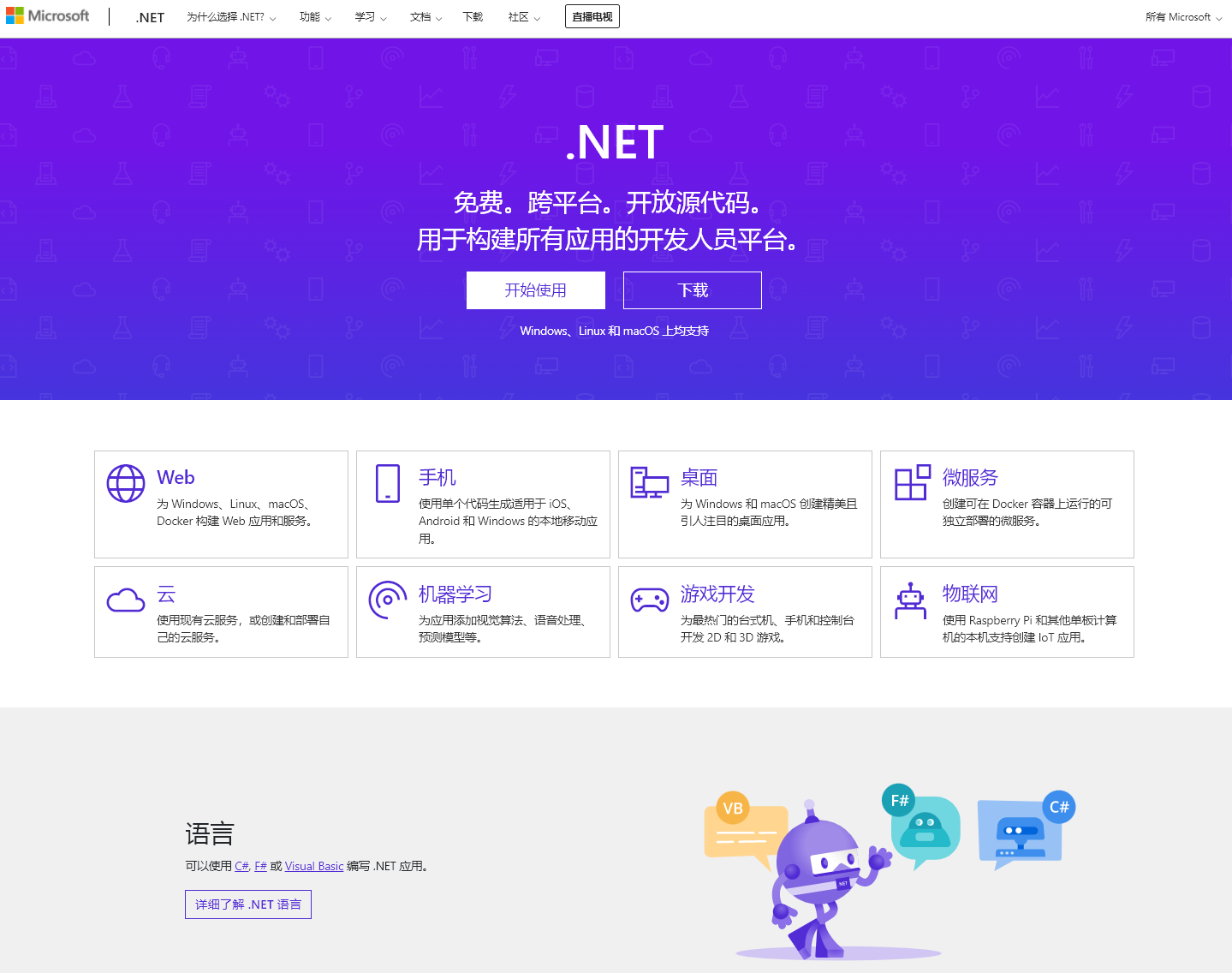
Homepage of the site in Simplified Chinese, Announcing dot.net in Japanese and Simplified Chinese

We aren’t done yet! You’ll notice that there are still some components of our site that are still only in English, which we’ll be working to localize them in the coming months. We’d love to hear your feedback about adding support for even more languages. Let us know what you think in the comment section below.

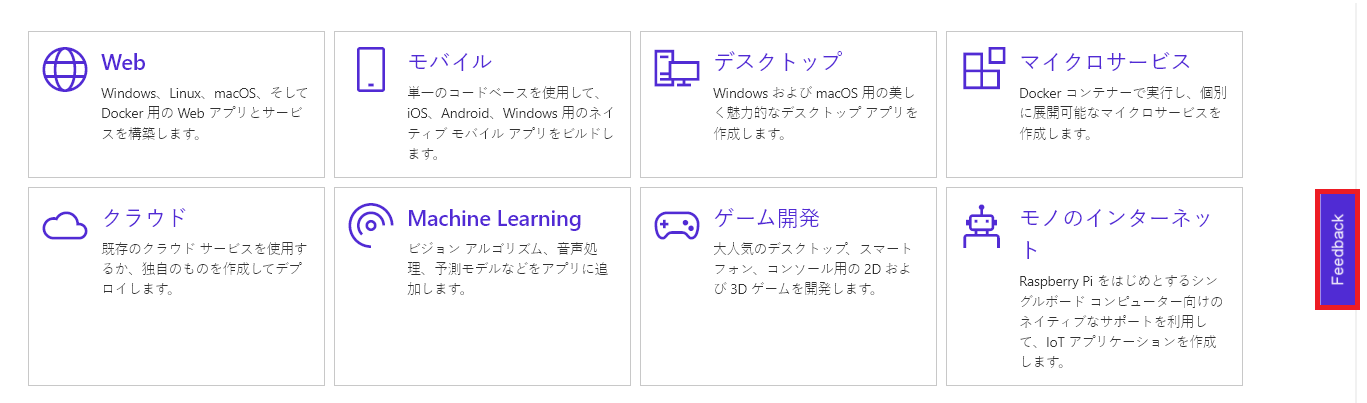
If you find an issue with the site – whether it’s a translation issue or another kind of problem, use the feedback button on the site to report it. We take the feedback very seriously and we’re constantly updating the site based on your feedback. You can find the feedback button on the right-hand side on desktop browsers or on the bottom of the page on the mobile version. Here’s an example of the desktop version:

The purple feedback button on the desktop versions of the site, Announcing dot.net in Japanese and Simplified Chinese

Implementation details

We’re doing this project in several phases.

We chose to start the project with our main repository, which contains most of our content and code. That part of the site uses ASP.NET Core Razor Pages.

The first phase of the project consisted of globalizing the existing site and this change was launched several months ago. That phase was mostly transparent to customers since globalization consists of designing and implementing an application that is culture and language neutral. This consisted of:

  • Adding the services to the middleware like calling the AddViewLocalization and UseRequestLocalization methods.
  • Ensuring the code was culture neutral.
  • Injecting the IViewLocalizer into the view (via the _ViewImports.cshtml file):
    @inject IViewLocalizer T;
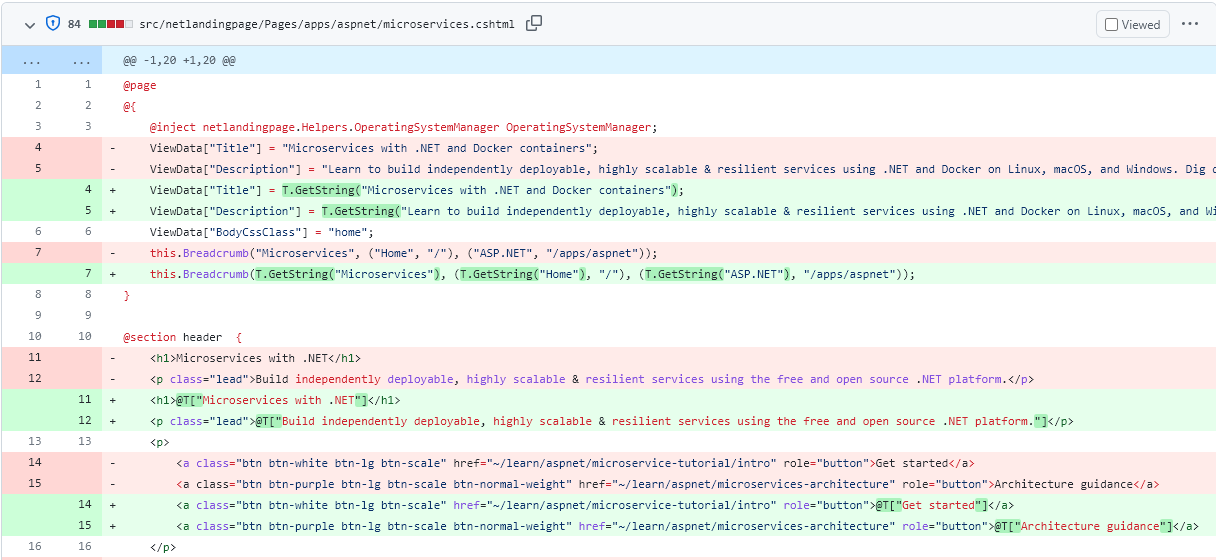
  • Identifying the strings that needed to be passed to the IViewLocalizer. The following image shows the before and after the globalization step for one of our pages:Code diff showing the before and after the globalization step, Announcing dot.net in Japanese and Simplified Chinese

For more information about the globalization and localization process in ASP.NET Core, see Globalization and localization in ASP.NET Core.

The second phase consisted of localizing the site, translating the English resources into Japanese and Simplified Chinese, adding support for the ja-JP and zh-CN cultures with appropriate routing and error handling, and adding a language selector. We decided to use Portable Object (PO) files and Orchard Core framework for this phase. We got lucky that the localization team at Microsoft had just finished adding support for PO files to their localization engine when we started the project, so it was perfect timing!

PO files are text-based files that contain the translated strings for a given language. There is one PO file for each language we support. Each string that was passed to the IViewLocalizer on the previous phase becomes the key for that particular resource. For example:

msgid "Microservices with .NET and Docker containers"
msgstr "具有 .NET 和 Docker 容器的微服务"

msgid "Learn to build independently deployable, highly scalable & resilient services using .NET and Docker on Linux, macOS, and Windows."
msgstr "了解如何在 Linux、macOS 和 Windows 上使用 .NET 和 Docker 独立构建可部署、高度可缩放和可复原的服务。"

You can think of PO files as string dictionaries and Orchard Core helps us to map these key values to extract the data into the PO file. To use Orchard Core, we simply added a reference to the OrchardCore.Localization.Core NuGet package. Each time we update the content on the website, the string will be added to the English resources.po file, which contains empty msgstr values. The new and updated strings will be displayed in English on the site until we receive the translations back from the localization team a few days later.

For more information about PO files, see Configure portable object localization in ASP.NET Core.

The next phases will consist of localizing the other site components and adding additional languages.

How culture detection will work on dot.net

The culture in the URL is represented by a language-region pair code. With this release, the site will now support the following cultures:

  • en-US – English (United States)
  • ja-JP – Japanese (Japan)
  • zh-CN – Chinese (Simplified, China)

Users visiting the site will be able to access using a URL with or without the culture in it, such as, https://dotnet.microsoft.com/download or https://dotnet.microsoft.com/ja-jp/download.

If the request comes in with the culture specified, we’ll serve the content in the specified culture. If the request comes in without the culture specified, then we need to try to determine which culture to show by using the following process:

  1. The site will look to see if the user has a cookie, and if found, it will redirect to that culture. The cookie will exist if the user has visited the .NET site before.
  2. If no cookie was found, the site inspects the incoming request’s Accept-Language HTTP header. That value indicates the language and locale that the client prefers. If it’s one of the supported values, we’ll display the content using that culture. Otherwise, we’ll display the en-US culture.

If you wish to see the content in a different language, you can change the language using the language picker on the bottom of the page.

Summary

A lot of people were involved on making this project happen. So many thanks to everyone involved!

I wanted to specifically call out some of the folks involved on reviewing the site ahead of the launch to make sure the translation quality was high and they sent us literally hundreds of feedback comments.

For Japanese, our thanks to: Akira Inoue, Hiroshi Yoshioka, Hiroyuki Mori, Kazuki Ota, Kazushi Kamegawa, Nobuyuki Iwanaga, Rie Moriguchi, Takayoshi Tanaka, Tetsuro Takao, Tetsuya Mori, Tomohiro Suzuki, Toshiyuki Takahagi, Yuji Shimano, and Yuta Matsumura.

For Simplified Chinese, our thanks to: Zhang Shanyou, Kinfey Lo, Christina Liang, Na Yang, and Cynthia Xin.

Stay tuned for further improvements and let us know what you think. I look forward to sharing more updates with you in the months ahead.

The post Announcing dot.net in Japanese and Simplified Chinese appeared first on .NET Blog.


source https://devblogs.microsoft.com/dotnet/dotnet-website-translation-updates/

What’s new for gRPC in .NET 6

gRPC is a modern, cross-platform, high-performance RPC framework. gRPC for .NET is built on top of ASP.NET Core and is our recommended way to build RPC services using .NET.

.NET 6 further improves gRPC’s already great performance and adds a new range of features that make gRPC better than ever in modern cloud-native apps. In this post I’ll describe these new features as well as how we are leading the industry with the first gRPC implementation to support end-to-end HTTP/3.

gRPC client-side load balancing

Client-side load balancing is a feature that allows gRPC clients to distribute load optimally across available servers. Client-side load balancing can eliminate the need to have a proxy for load balancing. This has several benefits:

  • Improved performance. No proxy means eliminating an additional network hop and reduced latency because RPCs are sent directly to the gRPC server.
  • Efficient use of server resources. A load-balancing proxy must parse and then resend every HTTP request sent through it. Removing the proxy saves CPU and memory resources.
  • Simpler application architecture. Proxy server must be set up and configured correctly. No proxy server means fewer moving parts!

Client-side load balancing is configured when a channel is created. The two components to consider when using load balancing:

  • The resolver, which resolves the addresses for the channel. Resolvers support getting addresses from an external source. This is also known as service discovery.
  • The load balancer, which creates connections and picks the address that a gRPC call will use.

The following code example configures a channel to use DNS service discovery with round-robin load balancing:

var channel = GrpcChannel.ForAddress(
    "dns:///my-example-host",
    new GrpcChannelOptions
    {
        Credentials = ChannelCredentials.Insecure,
        ServiceConfig = new ServiceConfig { LoadBalancingConfigs = { new RoundRobinConfig() } }
    });
var client = new Greet.GreeterClient(channel);

var response = await client.SayHelloAsync(new HelloRequest { Name = "world" });

Client-side load balancing

For more information, see gRPC client-side load balancing.

Transient fault handling with retries

gRPC calls can be interrupted by transient faults. Transient faults include:

  • Momentary loss of network connectivity.
  • Temporary unavailability of a service.
  • Timeouts due to server load.

When a gRPC call is interrupted, the client throws an RpcException with details about the error. The client app must catch the exception and choose how to handle the error.

var client = new Greeter.GreeterClient(channel);
try
{
    var response = await client.SayHelloAsync(
        new HelloRequest { Name = ".NET" });

    Console.WriteLine("From server: " + response.Message);
}
catch (RpcException ex)
{
    // Write logic to inspect the error and retry
    // if the error is from a transient fault.
}

Duplicating retry logic throughout an app is verbose and error-prone. Fortunately, the .NET gRPC client now has built-in support for automatic retries. Retries are centrally configured on a channel, and there are many options for customizing retry behavior using a RetryPolicy.

var defaultMethodConfig = new MethodConfig
{
    Names = { MethodName.Default },
    RetryPolicy = new RetryPolicy
    {
        MaxAttempts = 5,
        InitialBackoff = TimeSpan.FromSeconds(1),
        MaxBackoff = TimeSpan.FromSeconds(5),
        BackoffMultiplier = 1.5,
        RetryableStatusCodes = { StatusCode.Unavailable }
    }
};

// Clients created with this channel will automatically retry failed calls.
var channel = GrpcChannel.ForAddress("https://localhost:5001", new GrpcChannelOptions
{
    ServiceConfig = new ServiceConfig { MethodConfigs = { defaultMethodConfig } }
});

For more information, see Transient fault handling with gRPC retries.

Protobuf performance

gRPC for .NET uses the Google.Protobuf package as the default serializer for messages. Protobuf is an efficient binary serialization format. Google.Protobuf is designed for performance, using code generation instead of reflection to serialize .NET objects. In .NET 5 we worked with the Protobuf team to add support for modern memory APIs such as Span<T>, ReadOnlySequence<T>, and IBufferWriter<T> to the serializer. The improvements in .NET 6 optimize an already fast serializer.

protocolbuffers/protobuf#8147 adds vectorized string serialization. SIMD instructions allow multiple characters to be processed in parallel, dramatically increasing performance when serializing certain string values.

private string _value = new string(' ', 10080);
private byte[] _outputBuffer = new byte[10080];

[Benchmark]
public void WriteString()
{
    var span = new Span<byte>(_outputBuffer);
    WriteContext.Initialize(ref span, out WriteContext ctx);
    ctx.WriteString(_value);
    ctx.Flush();
}
Method Google.Protobuf Mean Ratio Allocated
WriteString 3.14 8.838 us 1.00 0 B
WriteString 3.18 2.919 ns 0.33 0 B

protocolbuffers/protobuf#7645 adds a new API for creating ByteString instances. If you know the underlying data won’t change, then use UnsafeByteOperations.UnsafeWrap to create a ByteString without copying the underlying data. This is very useful if an app works with large byte payloads and you want to reduce garbage collection frequency.

var data = await File.ReadAllBytesAsync(@"c:large_file.json");

// Safe but slow.
var copied = ByteString.CopyFrom(data);

// Unsafe but fast. Useful if you know data won't change.
var wrapped = UnsafeByteOperations.UnsafeWrap(data);

gRPC download speeds

gRPC users reported sometimes getting slow download speeds. Our investigation discovered that HTTP/2 flow control was constraining downloads when there is latency between the client and server. The server fills the receive buffer window before the client can drain it, causing the server to pause sending data. gRPC messages are downloaded in start/stop bursts.

This is fixed in dotnet/runtime#54755. HttpClient now dynamically scales the receive buffer window. When an HTTP/2 connection is established, the client will send a ping to the server to measure latency. If there is high latency, the client automatically increases the receive buffer window, enabling a fast, continuous download.

private GrpcChannel _channel = GrpcChannel.ForAddress(...);
private DownloadClient _client = new DownloadClient(_channel);

[Benchmark]
public Task GrpcLargeDownload() =>
    _client.DownloadLargeMessageAsync(new EmptyMessage());
Method Runtime Mean Ratio
GrpcLargeDownload .NET 5.0 6.33 s 1.00
GrpcLargeDownload .NET 6.0 1.65 s 0.26

HTTP/3 support

gRPC on .NET now supports HTTP/3. gRPC builds on top of HTTP/3 support added to ASP.NET Core and HttpClient in .NET 6. For more information, see HTTP/3 support in .NET 6.

.NET is the first gRPC implementation to support end-to-end HTTP/3, and we have submitted a gRFC for other platforms to support HTTP/3 in the future. gRPC with HTTP/3 is a highly requested feature by the developer community, and it is exciting to see .NET leading the way in this area.

gRPC and HTTP/3

Wrapping Up

Performance is a feature of .NET and gRPC, and .NET 6 is faster than ever. New performance-orientated features like client-side load balancing and HTTP/3 mean lower latency, higher throughput, and fewer servers. It is an opportunity to save money, reduce power use and build greener cloud-native apps.

To try out the new features and get started using gRPC with .NET, the best place to start is the Create a gRPC client and server in ASP.NET Core tutorial.

We look forward to hearing about apps built with gRPC and .NET and to your future contributions in the dotnet and grpc repos!

The post What’s new for gRPC in .NET 6 appeared first on .NET Blog.


What’s new for gRPC in .NET 6

gRPC is a modern, cross-platform, high-performance RPC framework. gRPC for .NET is built on top of ASP.NET Core and is our recommended way to build RPC services using .NET.

.NET 6 further improves gRPC’s already great performance and adds a new range of features that make gRPC better than ever in modern cloud-native apps. In this post I’ll describe these new features as well as how we are leading the industry with the first gRPC implementation to support end-to-end HTTP/3.

gRPC client-side load balancing

Client-side load balancing is a feature that allows gRPC clients to distribute load optimally across available servers. Client-side load balancing can eliminate the need to have a proxy for load balancing. This has several benefits:

  • Improved performance. No proxy means eliminating an additional network hop and reduced latency because RPCs are sent directly to the gRPC server.
  • Efficient use of server resources. A load-balancing proxy must parse and then resend every HTTP request sent through it. Removing the proxy saves CPU and memory resources.
  • Simpler application architecture. Proxy server must be set up and configured correctly. No proxy server means fewer moving parts!

Client-side load balancing is configured when a channel is created. The two components to consider when using load balancing:

  • The resolver, which resolves the addresses for the channel. Resolvers support getting addresses from an external source. This is also known as service discovery.
  • The load balancer, which creates connections and picks the address that a gRPC call will use.

The following code example configures a channel to use DNS service discovery with round-robin load balancing:

var channel = GrpcChannel.ForAddress(
    "dns:///my-example-host",
    new GrpcChannelOptions
    {
        Credentials = ChannelCredentials.Insecure,
        ServiceConfig = new ServiceConfig { LoadBalancingConfigs = { new RoundRobinConfig() } }
    });
var client = new Greet.GreeterClient(channel);

var response = await client.SayHelloAsync(new HelloRequest { Name = "world" });

Client-side load balancing

For more information, see gRPC client-side load balancing.

Transient fault handling with retries

gRPC calls can be interrupted by transient faults. Transient faults include:

  • Momentary loss of network connectivity.
  • Temporary unavailability of a service.
  • Timeouts due to server load.

When a gRPC call is interrupted, the client throws an RpcException with details about the error. The client app must catch the exception and choose how to handle the error.

var client = new Greeter.GreeterClient(channel);
try
{
    var response = await client.SayHelloAsync(
        new HelloRequest { Name = ".NET" });

    Console.WriteLine("From server: " + response.Message);
}
catch (RpcException ex)
{
    // Write logic to inspect the error and retry
    // if the error is from a transient fault.
}

Duplicating retry logic throughout an app is verbose and error-prone. Fortunately, the .NET gRPC client now has built-in support for automatic retries. Retries are centrally configured on a channel, and there are many options for customizing retry behavior using a RetryPolicy.

var defaultMethodConfig = new MethodConfig
{
    Names = { MethodName.Default },
    RetryPolicy = new RetryPolicy
    {
        MaxAttempts = 5,
        InitialBackoff = TimeSpan.FromSeconds(1),
        MaxBackoff = TimeSpan.FromSeconds(5),
        BackoffMultiplier = 1.5,
        RetryableStatusCodes = { StatusCode.Unavailable }
    }
};

// Clients created with this channel will automatically retry failed calls.
var channel = GrpcChannel.ForAddress("https://localhost:5001", new GrpcChannelOptions
{
    ServiceConfig = new ServiceConfig { MethodConfigs = { defaultMethodConfig } }
});

For more information, see Transient fault handling with gRPC retries.

Protobuf performance

gRPC for .NET uses the Google.Protobuf package as the default serializer for messages. Protobuf is an efficient binary serialization format. Google.Protobuf is designed for performance, using code generation instead of reflection to serialize .NET objects. In .NET 5 we worked with the Protobuf team to add support for modern memory APIs such as Span<T>, ReadOnlySequence<T>, and IBufferWriter<T> to the serializer. The improvements in .NET 6 optimize an already fast serializer.

protocolbuffers/protobuf#8147 adds vectorized string serialization. SIMD instructions allow multiple characters to be processed in parallel, dramatically increasing performance when serializing certain string values.

private string _value = new string(' ', 10080);
private byte[] _outputBuffer = new byte[10080];

[Benchmark]
public void WriteString()
{
    var span = new Span<byte>(_outputBuffer);
    WriteContext.Initialize(ref span, out WriteContext ctx);
    ctx.WriteString(_value);
    ctx.Flush();
}
Method Google.Protobuf Mean Ratio Allocated
WriteString 3.14 8.838 us 1.00 0 B
WriteString 3.18 2.919 ns 0.33 0 B

protocolbuffers/protobuf#7645 adds a new API for creating ByteString instances. If you know the underlying data won’t change, then use UnsafeByteOperations.UnsafeWrap to create a ByteString without copying the underlying data. This is very useful if an app works with large byte payloads and you want to reduce garbage collection frequency.

var data = await File.ReadAllBytesAsync(@"c:large_file.json");

// Safe but slow.
var copied = ByteString.CopyFrom(data);

// Unsafe but fast. Useful if you know data won't change.
var wrapped = UnsafeByteOperations.UnsafeWrap(data);

gRPC download speeds

gRPC users reported sometimes getting slow download speeds. Our investigation discovered that HTTP/2 flow control was constraining downloads when there is latency between the client and server. The server fills the receive buffer window before the client can drain it, causing the server to pause sending data. gRPC messages are downloaded in start/stop bursts.

This is fixed in dotnet/runtime#54755. HttpClient now dynamically scales the receive buffer window. When an HTTP/2 connection is established, the client will send a ping to the server to measure latency. If there is high latency, the client automatically increases the receive buffer window, enabling a fast, continuous download.

private GrpcChannel _channel = GrpcChannel.ForAddress(...);
private DownloadClient _client = new DownloadClient(_channel);

[Benchmark]
public Task GrpcLargeDownload() =>
    _client.DownloadLargeMessageAsync(new EmptyMessage());
Method Runtime Mean Ratio
GrpcLargeDownload .NET 5.0 6.33 s 1.00
GrpcLargeDownload .NET 6.0 1.65 s 0.26

HTTP/3 support

gRPC on .NET now supports HTTP/3. gRPC builds on top of HTTP/3 support added to ASP.NET Core and HttpClient in .NET 6. For more information, see HTTP/3 support in .NET 6.

.NET is the first gRPC implementation to support end-to-end HTTP/3, and we have submitted a gRFC for other platforms to support HTTP/3 in the future. gRPC with HTTP/3 is a highly requested feature by the developer community, and it is exciting to see .NET leading the way in this area.

gRPC and HTTP/3

Wrapping Up

Performance is a feature of .NET and gRPC, and .NET 6 is faster than ever. New performance-orientated features like client-side load balancing and HTTP/3 mean lower latency, higher throughput, and fewer servers. It is an opportunity to save money, reduce power use and build greener cloud-native apps.

To try out the new features and get started using gRPC with .NET, the best place to start is the Create a gRPC client and server in ASP.NET Core tutorial.

We look forward to hearing about apps built with gRPC and .NET and to your future contributions in the dotnet and grpc repos!

The post What’s new for gRPC in .NET 6 appeared first on .NET Blog.


source https://devblogs.microsoft.com/dotnet/grpc-in-dotnet-6/

Building Apps from a Business Perspective - App Product Management Complete Course


Curriculum for the course Building Apps from a Business Perspective - App Product Management Complete Course

Learn to turn your app solution into a reality. This course is for for leaders, entrepreneurs and software developers. 0:00:00 Course Introduction 0:03:14 Unit 1 - Motivations for building an app 0:06:44 Unit 1.1 What is the value proposition of your app? 0:12:40 Do you need a web app or just a better website? 0:15:14 Categories of Apps – which app category is easiest to compete in? 0:34:24 Unit 1.2 Identify the problem you are trying to solve with your app. 0:36:19 Candy, vitamins or addictive painkiller? 0:41:59 Fulfillment, recognition, security 0:42:54 The Five Whys 0:49:58 Unit 1.3 How to discover a niche in the marketplace 0:52:59 Follow popular trend 0:56:39 Add a twist 0:58:21 Your own expertise 0:59:44 Problems in existing competition 1:04:34 Unit 1.4 Listening to users 1:11:44 Users that exist in the market 1:14:39 Get user feedback 1:24:54 Idea 2.0 1:28:17 Homework 1.1 Airbnb and Lyft 1:33:19 Homework 1.2 App Annie and Sensor Tower 1:41:09 Homework 1.3 Write an application plan 1:48:44 Unit 2 UI, UX, MVP design 1:56:34 How to create user stories 2:02:14 Planning for an MVP 2:05:24 Unit 2.2 Designing an effective UI user interface 2:07:04 On boarding new users 2:09:44 The Google UI Case Study 2:10:14 The Photoshop Adobe UI negative Case Study 2:14:19 Effective UI elements 2:17:20 Don’t Make Me Thing Steve Krug 2:19:34 UI design templates 2:20:34 Design for your target audience 2:22:39 Unit 2.3 How to design an effective UX User Experience 2:23:24 UX is where Design strategy and Technology intersect 2:27:14 Application Flow 2:29:34 Measuring Conversion Rates 2:30:14 UX outside of the app 2:31:04 The User Empathy Map 2:35:39 Six principles for a positive UX 2:37:34 Unit 2.4 The MVP 2:38:54 The Lean Startup MVP concept by Eric Ries 2:39:39 Planning for future versions of your app 2:40:34 What is NOT an MVP 2:42:44 Zappos MVP Case Study 2:43:44 The MVP design pyramid 2:45:44 The purpose of an MVP 2:46:44 Keeping the cost of an MVP low 2:50:36 Homework 2.1 App Design Case Studies 3:01:34 Homework 2.2 Develop User Stories 3:07:59 Homework 2.3 Interactive UI prototype 3:11:09 Unit 3.1 Marketing and Monetization for an App 3:12:34 The BMC Case Study 3:27:04 Unit 3.2 Monetization Strategies of Apps 2:28:29 Apple App Store vs Google Play Store revenue 3:31:14 iOS vs Android user value per customer 3:32:19 iOS vs Android market share in various countries 3:44:14 Unit 3.3 Marketing Your App 3:45:34 How users discover your app 3:53:09 Unit 3.4 Dealing with Investors 4:04:44 Homework 3.1 Build a BMC for your app 4:07:06 Unit 4.1 Building Customer Loyalty 4:08:04 Why Customers Abandon Apps? 4:09:49 First-to-Mind solution 4:10:59 Compulsion 4:11:04 Morality of Addictive Apps 4:13:04 The HOOK app addictive model 4:32:49 Homework 4.1 Understanding Hook 4:35:24 Homework 4.2 Applying Hook 4:38:54 Unit 5.1 Choosing the Right Tools 4:40:24 Five Reasons Not to Build an App 4:48:19 Unit 5.2 Nine Companies Who Nailed their App 4:59:31 Unit 5.3 Development Languages and Cross Platform Tools 5:18:58 Homework 5.1 Compare Dev Tools 5:23:14 Homework 5.2 Recommend a Development Solution 5:27:34 Unit 6.1 Full Stack Considerations 5:28:20 Choosing a Database Backend 5:29:14 SQL 5:31:34 noSQL 5:35:09 SQL vs noSQL 5:44:04 Graph Database 5:50:09 Full Text Database 5:56:34 Vertical Scaling 5:59:14 Horizontal Scaling 6:01:54 Data Duplication in Distributed Databases 6:04:44 SQL Shards 6:13:22 Homework 6.1 Recommend Database Solutions 6:16:49 Homework 6.2 Explore API services 6:20:14 Unit 7.1 Hiring the Development Team 6:20:54 Four Roles of a Software Development Team 6:21:54 Product Manager 6:24:19 Product Designer 6:29:24 Front End Developer 6:30:29 Back End Developer 6:36:04 Unit 7.2 Mobile vs Web Development 6:40:44 Skills Used in Mobile vs Web Development 6:40:34 Web vs Mobile Development Salaries 6:47:59 Unit 7.3 Agile Team Management 6:48:54 SDLC Agile vs Waterfall 6:49:44 What is Waterfall Development? 6:50:59 What is Agile Scrum Methodology? 6:56:42 The Product Backlog 6:58:04 Spring Planning 6:58:39 Sprint Backlog 6:58:59 What is a Sprint? 6:59:42 Product Increment 7:00:29 Daily Scrum 7:01:54 Sprint Review 7:02:44 Sprint Retrospective 7:03:23 Unit 7.4 How to Write a Job Requisition 7:08:29 Cross Field Expertise 7:10:14 Intangibles 7:14:29 Adjacent Skills 7:16:44 Portfolio 7:19:04 Homework 7.1 Team Roles 7:23:14 Homework 7.2 Internal Job Requisition 7:28:18 Homework 7.3 External Job Posting 7:32:24 Unit 8.1 Future Trends in Mobile Development 7:33:19 Cloud Computing 7:34:52 Artificial Intelligence 7:37:04 Cross Platform Dev 7:38:24 mCommerce 7:39:34 Virtual Reality 7:41:34 Augmented Reality 7:44:21 Higher Bandwidth 7:45:14 IOT 7:47:29 Wearables 7:47:49 Security 7:48:14 Blockchain 7:48:59 Beacon 7:50:22 Homework 8.1 Review Past Predictions 7:53:59 Homework 8.2 Current State of Development Tools 7:56:42 Homework 8.3 Future Mobile Tech

Watch Online Full Course: Building Apps from a Business Perspective - App Product Management Complete Course


Click Here to watch on Youtube: Building Apps from a Business Perspective - App Product Management Complete Course


This video is first published on youtube via freecodecamp. If Video does not appear here, you can watch this on Youtube always.


Udemy Building Apps from a Business Perspective - App Product Management Complete Course courses free download, Plurasight Building Apps from a Business Perspective - App Product Management Complete Course courses free download, Linda Building Apps from a Business Perspective - App Product Management Complete Course courses free download, Coursera Building Apps from a Business Perspective - App Product Management Complete Course course download free, Brad Hussey udemy course free, free programming full course download, full course with project files, Download full project free, College major project download, CS major project idea, EC major project idea, clone projects download free

Share this post

Search This Blog

What's New

The "AI is going to replace devs" hype is over – 22-year dev veteran Jason Lengstorf [Podcast #201]

Image
Curriculum for the course The "AI is going to replace devs" hype is over – 22-year dev veteran Jason Lengstorf [Podcast #201] Today Quincy Larson interviews Jason Lengstorf. He's a college dropout who taught himself programming while building websites for his emo band. 22 years later he's worked as a developer at IBM, Netlify, run his own dev consultancy, and he now runs CodeTV making reality TV shows for developers. We talk about: - How many CEOs over-estimated the impact of AI coding tools and laid off too many devs, whom they're now trying to rehire - Why the developer job market has already rebounded a bit, but will never be the same - Tips for how to land roles in the post-LLM résumé spam job search era - How devs are working to rebuild the fabric of the community through in-person community events Support for this podcast is provided by a grant from AlgoMonster. AlgoMonster is a platform that teaches data structure and algorithm patterns in a structure...

Labels

Programming Video Tutorials Coursera Video Tutorials Plurasight Programming Tutorials Udemy Tutorial C# Microsoft .Net Dot Net Udemy Tutorial, Plurasight Programming Tutorials, Coursera Video Tutorials, Programming Video Tutorials Asp.Net Core Asp.Net Programming AWS Azure GCP How To WordPress Migration C sharp AWS Project Git Commands FREE AWS Tutorial OldNewThings Git Tutorial Azure vs AWS vs GCP New in .Net javascript AI Google I/O 2025 Wordpress jquery Generative Video Git Git Squash Google Flow AI PHP SQL Veo 3 squash commit CSS Cloud Services React Tutorial With Live Project Source Code git rebase CPR Nummer Dropdown Reset Javascript Figma Figma Beginner Tutorial Geolocation Non-Programmer Content Python Free Course Think Simply Awesome Tutorial UI UX Live Project UI/UX Full Course Wireframing dotnet core runtime error html API Gateway AWS EKS vs Azure AKS All in one WP stuck C++ C++ Coroutines CPR Denmark ChatGPT Cloud Database Cloud DevOps Cloud Security Cloud Storage Contact Form 7 Dropdown Unselect Javascript E commerce Free AWS Terraform Project Training Git Commit Google Drive Files Google Drive Tips Http Error 500.30 Http Error 500.31 Interview Questions Learn Courutines C++ Microservices for Live Streaming PII Denmark Pub Sub SQL Server SSIS Terraform Course Free Terraform Tutorial Free USA E commerce strategies UpdraftPlus UpdraftPlus Manual Restore Website Optimization Strategies dropdown javascript select drop down javascript smarttube apk error 403 smarttube next 403 Error 413 Error 503 504 524 AI & ML AI Assistants AI Course CS50 AI in daily life AWS API Gateway AWS EBS AWS EC2 vs Azure VMs vs GCP Compute Engine AWS EFS AWS IAM AWS Lamda AWS RDS vs Azure SQL AWS Redshift AWS S3 AZ-104 AZ-104 Free Course AZ-104 Full Course AZ-104 Pass the exam Abstract Class C# Abstract Method Ajax Calender Control Ajax Control Toolkit All In One Extension Compatibility All In One WP Freeze All In One WP Migration All in one WP All-in-One WP Migration Android 15 Android TV Applying Theme html Asp.net core runtime Error Audio Auto Complete Azure AD Azure APIM Azure Administrator Certification Azure Blob Storage Azure Data Lake Azure Files Azure Function Azure Managed Disk Azure Synapse Base Class Child Class Best Grocery Price Big Data BigBasket vs Grofers Bing Homepage Quiz Blogger Import Blogger Post Import Blogger XML Import Bluetooth Connectivity Browser Detail Building Real-Time Web Applications Bulk Insert CI/CD CPR Address Update CPR Generator CPR Generator Denmark CS50 AI Course CS50 AI Python Course CS50 Artificial Intelligence Full Course CVR Centrale Virksomhedsregister Change Workspace TFS ChatGPT Essay Guide ChatGPT Usage ChatGPT vs Humans Cloud API Management Cloud CDN Cloud Computing Cloud Data Warehouse Cloud Event Streaming Cloud IAM Cloud Messaging Queue Cloud Monitoring and Logging Cloud Networking CloudFront Cloudflare Cloudwatch Compute Services Connect a Bluetooth Device to my PC site:microsoft.com Containers ControlService FAILED 1062 Corona Lockdown MP CosmosDB Covid19 Covid19 Bhopal Covid19 Home Delivery MP Covid19 Indore Covid19 Susner Covid19 Ujjain Cypress Javascript Cypress Javascript framework Cypress Javascript testing Cypress Javascript tutorial Cypress Javascript vs typescript DNS Danish CVR Data Analytics Data Analytics Course Free Data Engineering Data Structure Full Course Data Visualization Database Database Diagram Visualizer Davek Na Dodano Vrednost Dbdiagram export seeder Deep Learning Course Denmark Numbers Det Centrale Personregister Det Centrale Virksomhedsregister DevOps Device Compatibility Dictionary Dictionary in C# Digital Economy Disaster Recovery for Web Applications Disaster-Proof Infrastructure Dmart Frenchise Dmart Home Delibery Dmart Mumbai Address Dmart Pickup Points Doodle Jump Drive Images On Blog Drive Images On Website Driver Problems DropDown Dropbox Dropdown jquery DynamoDB ETL ETL Package Ecommerce Store using AWS & React Embed Drive Images Escape Sequences in c#.Net Event Hub Explicit Join Extract Facebook App Fake CVR Denmark Fake DDV Slovenia Fake VAT Number Fake Virk Number Faker Feature Toggle Find CPR Information Find a Word on Website Firestore Flappy Bird Game Form Selectors using jQuery Free React Portfolio Template FreeCodeCamp Frontend Best Practices for Millions of Users Full Text Index View G Drive Hosting GAN certification course GCP Cloud Data Lake GCP Filestore GCP Functions GCP IAM GCP Persistent Disk Gemini Git Checkout Google Adsense Setting Google Beam Google BigQuery Google Conversion Tracking Google Docs Advanced Tutorial Google Drive Clone Google Drive Clone Bot Google Drive Clone HTML CSS Google Drive Clone PHP Google Drive Clone React Google Drive Clone Tutorial Google Drive Clone VueJS Google Drive File Sharing Google Drive Images Google Drive Sharing Permissions Grocery Price Compare Online Grocery in Corona Grocery in Covid19 Grofers vs DMart vs Big basket HAXM installation HTML Storage HTML to PDF Javascript HTML2Canvas HTML5 HTML5 Append Data HTML5 Audio HTML5 Data Storage HTML5 Storage HTML5 Video Harvard University AI Course Header Sent Height Jquery High Availability in Live Streaming Platforms High-Concurrency Frontend Design High-Concurrency Web Applications How to Search for a Word on Mac Html2Canvas Black Background issue Http Error 413 Http Error 500.35 IIS INNER Join Image Gallery Blogger Image Gallery Blogger Picasa Image Gallery Blogger Template Image Gallery Blogger Template Free Implicit Join Indexing in SQL Instagram Clone React Instagram Clone Script Install NodeJS Ubuntu Internet Infrastructure Interview IoT IoT Core IoT Hub JS Game Tutorial Java Feature Toggle Javascript game tutorial JioCinema Case Study Keep Me Login Key Management Kinesis Learn Scrappy with a live project List Live Streaming Data Delivery Live Streaming Performance Optimization Load Load Balancer Looping Dictionary MTech First Semester Syllabus MTech Syllabus MVC Mac Mac Finder Shortcut Media Controller Media Group Attribute Microservices Architecture for Scalability Missing MySQL Extension Mobile Optimization Multiple Audio Sync Multiple Video Sync Mumbai Dmart List MySQL MySQL ERD Generator Next.js Beginner Tutorial Ngnix NodeJS NodeJS Ubuntu Commands Numpy OOPS Concepts OOPS in C# Object Oriented Programming Object Storage Outer Join PHP Installation Error PHP WordPress Installation Error Pandas Personligt identifikations nummer Pipedrive Pipedrive Quickbooks Integration Portfolio Website using React Project Astra PyTorch Quickbooks Quote Generator RGPV Syllabus Download Random SSN Generator ReCaptcha Dumbass React Feature Toggle Real-Time Video Processing Architecture Real-Time Video Processing Backend RegExp Regular Expression Reinstall Bluetooth Drivers Remember Me Remove NodeJS Ubuntu Renew DHCP Lease Reset IP Address Linux Reset IP Address Mac Reset IP Address Windows Reset Remote Connection Reset Remote Connection Failure Resize Textarea Restore Errors Restore Failed UpdraftPlus Route 53 SOS Phone SQL Indexed Tables SQL Joins SQL Seed generator SQS SSIS Package SSIS Tutorial SSN Generator for Paypal SSN Number SSN Number Generator SSN Validator Safari 8 Safari Video Delay SageMaker Scalable Backend for High Concurrency Scalable Cloud Infrastructure for Live Streaming Scalable Frontend Architectures Scalable Live Streaming Architecture Scrapy course for beginners Search A word Search for a Word in Google Docs Secret Management Serverless Service Bus Slovenian VAT Generator SmartTube Software Architect Interview Questions Software Architect Mock Interview Sparse Checkout Spotlight Mac Shortcut Stored Procedure Subtree Merge T-Mobile IMEI Check TFS TMobile IMEI check unlock Team Foundation Server Terraform Associate Certification Training Free Text Search Text color Textarea Resize Jquery Theme Top WordPress Plugins Transform Trim javascript Troubleshooting TypeScript Beginner Tutorial Ubuntu Unleash Feature Toggle Update Computer Name UpdraftPlus 500 UpdraftPlus Backup Restore UpdraftPlus Error 500 UpdraftPlus Error 504 UpdraftPlus Error 524 UpdraftPlus HTTP Error UpdraftPlus New Domain UpdraftPlus Restore Not Working UpdraftPlus Troubleshooting Upstream Reset Error Use Google Drive Images VAT Number Generator Verizon imei check Verizon imei check paid off Verizon imei check unlock Verizon imei check\ Version Control Vertex AI Video View Indexing SQL Views in SQL Virksomhedsregister Virtual friends Visual Studio 2013 WHERE Clause WHPX expo Web Security Web scraping full course with project Web3 What is Feature Toggle WordPress Backup Troubleshooting WordPress Backup UpdraftPlus WordPress Database Backup WordPress Error 503 WordPress Installation Error WordPress Migration UpdraftPlus Wordpress Restore Workspaces Commands Your ip has been banned Zero Click angle between two points bing homepage quiz answers bing homepage quiz answers today bing homepage quiz not working bing homepage quiz reddit bing homepage quiz today byod Verizon imei check chatgpt essay example chatgpt essay writer chatgpt essay writing check tmobile imei contact form 7 captcha contact form 7 captcha plugin contact form 7 recaptcha v3 cpr-nummer engelsk cpr-nummer liste cpr-nummer register cpr-nummer tjek dbdiagram dom load in javascript dotnet core hosting bundle dotnet failed to load dotnet runtime error get url in php how to search for a word on a page how to search for a word on a page windows ipconfig release is cypress javascript istio transport failure jQuery AutoComplete jQuery Input Selector jQuery Menu jQuery Options joins in mySql jquery selector jquery selectors jsPDF jsPDF images missing key key-value keypress event in jQuery kubernetes upstream error localStorage metro by t-mobile imei check nemid cpr-nummer react native expo setup react native on Windows react native setup recaptcha v3 contact form 7 recaptcha wordpress contact form 7 reset connection failure resize control jQuery response code 403 smarttube round number in javascript select sessionStorage smarttube 403 エラー smarttube apk smarttube beta smarttube download smarttube reddit smarttube unknown source error 403 smartube sos iphone top right sos on iphone 13 sos only iphone substr substr in javascript tmobile imei tmobile imei check paid off tmobile imei number total by Verizon imei check trim trim jquery turn off sos iphone turn off sos on iphone 11 unknown source error 403 unknown source error response code 403 smarttube upstream connect error url in php view hidden files mac finder zuegQmMdy8M ошибка 403 smarttube
  • ()
  • ()
Show more
an "open and free" initiative. Powered by Blogger.